Minor Pieces are an Even Trade... Right?

Submitted by WIM energia on Fri, 09/18/2009 at 12:01am.

[Ed: This is the last article of our switch-around week. Each of this week's daily columns (beginning last Sunday) was actually written by one of our other columnists. If you have a guess as to who wrote what, send it to me (dpruess). From entries with all 6 authors correctly identified, I will randomly pick a member to receive a chess.com shirt, and one to receive a 3-month membership upgrade.]

[Ed: This article was actually authored by GMs Magesh and Arun]

What is it that makes a great chess player? We can take several qualities from several champions and make a complete list of the attributes of a great chess player. Today, we will talk about one of those attributes, the ability to convert even the tiniest of advantages and put pressure on your opponent. It is like a good cop walking into a crime scene, they zone in on the things that matter right away compared to an ordinary cop who has to go through several things before they realize what the most important thing to notice is. Obviously such subtle advantages can be realized only with an exemplary feel for the position. To know exactly what pieces to have and where to have them is an inborn gift for some of the greats in chess.


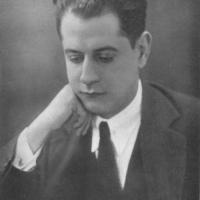
The Cuban world champion Capablanca was one of them. He was one of the most naturally talented world champions ever. He had this so-called feel for the position and the knack for trading off the right pieces. Let us start with a simple yet strong demonstration from Capablanca to see how simple trades can accumulate powerful advantages over a period of time.


This is the kind of game that will leave your opponent confused. Sometimes it is hard to locate a clear-cut mistake in games like these, but there are some minor flaws here and there. And that eventually has been capitalized upon beautifully by Capablanca to finish off the game in style.


These days we use engines to evaluate positions. Anatoly Karpov is another genius who will be able to pick out even the smallest difference of these evaluations by glancing through the important aspects of the position. The next game is a perfect example emphasizing proper trading of pieces and realizing minute advantages.


Karpov has spent three knight moves to take out this bishop. Now, black does not have the bishop pair advantage anymore and also if black's queenside pawn structure can be maintained at c6 and d5, then his light squared bishop can be troubled later on. From here on, Karpov takes tiny little steps to increase his initiative slowly.


A knight or a bishop is valued as 3 material points according to the chess rules. Some evaluate bishops relatively more than knights as they turn out superior in a greater number of positions. However some of the simpler knight for knight and bishop for bishop trades have a lot more to understand than what meets our ignorant eyes. It is some of these chess greats like Capablanca and Karpov who understand the smallest of nuances in such trades and use them to their advantage.

» posted in Strategy
« Previous | 1 2 | Next »

Comments:

by ekeak - 2 months ago
Bowling Green United States
Member Since: Oct 2009
Member Points: 4

Very good. I like how you stated the obvious, that it is always good to double up pawns (which i often implement in my games). The games you chose were a bit hard for most intermediate players here to understand though (ie long endgames). Thanks for sharing.

by Abhilash_007 - 2 months ago
Bangalore India
Member Since: Dec 2008
Member Points: 36

well Than q

by Abhilash_007 - 2 months ago
Bangalore India
Member Since: Dec 2008
Member Points: 36

Gud article!

by pmrichard_93 - 3 months ago
CT United States
Member Since: Sep 2009
Member Points: 66

cool ty

by slvnfernando - 3 months ago
Colombo Sri Lanka
Member Since: Aug 2009
Member Points: 159

Good old Capa....!! As long as the game of chess remains with humanity , Capa will be remembered for masterpieces just like this!!

by sryiwannadraw - 3 months ago
Austin, Texas United States
Member Since: Mar 2009
Member Points: 183

I like the end the most... nice job lol brillant men

by Rafalinx - 3 months ago
Lisbon Portugal
Member Since: Sep 2009
Member Points: 52

very good article. thanks.

by Whis - 3 months ago
United States
Member Since: Feb 2009
Member Points: 78

I bet this is the Becerra article.  He loves to bring up the old greats like capablanca

by Precessional_Groove - 3 months ago
Western United States
Member Since: Sep 2008
Member Points: 77

Yes !!

Chess game examples that are annotated from the first move to the end !!

uh... ... ahhh ... I mean ... ....


... ... PG was here.

by Jpatrick - 3 months ago
Pennsylvania United States
Member Since: Jul 2008
Member Points: 222

I suppose that you can view Capablanca-Janowski, New York, 1913 as technique in making the proper exchanges of minor pieces. To me, however, that game makes more sense if it is viewed in terms of controlling the centre.

by mtngoat - 3 months ago
ca United States
Member Since: May 2009
Member Points: 4

Super article. I would guess that Mr. Silman wrote this one.

by WuGambinoKillaBee - 3 months ago
Sydney Australia
Member Since: Aug 2009
Member Points: 148

"that eventually has been capitalized upon beautifully by Capablanca"
lol, i thought he was Cuban? oh right, 1913...

by NrthrnKnght - 3 months ago
Lewiston Idaho United States
Member Since: Jun 2009
Member Points: 119

Capa was the first chessplayer I studied.Then came fischer....both have similar styles.I humblely say my style is "close" to theirs

by PeterArt - 3 months ago
Luijk Belgium
Member Since: Feb 2009
Member Points: 600

Nice article.
its always wise to think about what happens after an exchange.
I won this game because i understood what would happen after the exchange while i was still in my opening. for my opponent it might have looked as a simple exchange, but i made then the main tactic because of it and won the game.

by Krokodilizm - 3 months ago
Stepanakert, Artsakh Armenia
Member Since: Jul 2009
Member Points: 82

Most chess matches reduce to endgames or late middlegames before resignation. What can we conclude here? Right. An overwhelming part of chess players are geniuses because they know how to win in the endgame!! Cmon guys, winning in the endgame is not a matter of clever exchanges throughout the game. It all boils down to little inaccuracies. There is nothing special in the Capablanca game. Just fishy play by black, that's all. very passive defence by black. I was disappointed to see great Capablanca being cheered for such a dull game...

by Kaonashi - 3 months ago
Nieuwegein Netherlands
Member Since: Nov 2008
Member Points: 71

The first Capablanca-trade I used a couple of times myself - for the same reason: mess up black's pawn structure. Insightfull article.

by ShockeR_40 - 3 months ago
Wrocław Poland
Member Since: Aug 2009
Member Points: 90

i love it :P great !

by Mrki - 3 months ago
Belgrade Serbia
Member Since: Sep 2008
Member Points: 53

Great article!!! When i red first passage i knew whose games  we are going to see. 

by Dmittry - 3 months ago
Moscow Russia
Member Since: Jun 2009
Member Points: 215

Great! Thank you

by kerver73 - 3 months ago
Thessaloniki Greece
Member Since: Feb 2009
Member Points: 1226

Thank you energia!Great article!

« Previous | 1 2 | Next »

Add your comment:

Join Chess.com for free to add your comment! Already a member? Then login now to comment.