8055 Players currently online!
Man vs. Machine - good luck!
Turn-based games at any time!
Vote for the best move to win!
Do you have what it takes?
Sharpen your tactical vision!
Get advice and game insights!
Learn from top players & pros!
View millions of master games!
Your virtual chess coach!
Perfect your opening moves!
Test your skills vs. computer!
Find the right private coach!
Can you solve it each day?
Bring it all together!
Beginners, start here!
Make friends & play team games!
News from the world of chess!
Search all Chess.com members!
Find local clubs & events!
Who's the best of your friends?
Read what members are saying!
koolaidking
Come on guys it was cool man maybe hes just starting to teach!
I THINK ITS A GOOD POST!
pedalmasher
I enjoy most videos on chess.com, but this one was a waste of my time and it certainly has a misleading title.
sarterus
Weak video, bad title, mostly random ramblings of a strong player. Not a good use of ones time. Playing well is one skill, while teaching effectiely is another skill.
The only good take away is practice calculating tough postion, do not just use a computer as to get the right answer.
aiki2
Very interesting.. Need alot of help in this area.. Thanks great video
Icanfight
Why is this a great video? (He does have great videos though!) All he said was don't use a computer-calculate yourself.That should not take 20 minutes. The title is misleading. How about taking a won position in a GM game(that the amateur doesn't understand why it is over..)and play against Fritz to try to win. This could improve your technique and understanding. How about playing won endgames against the computer at the highest level to confirm that you know what you are doing to the point that a GM could not beat you in that position.
cberman
Great video. It is admittedly very tempting to use the computer for any mildly difficult position.
ArmanA97
GD video thanks!
IM dpruess
part 2 went up today. check it out :-)
jthutchens
Great video. Thanks. Basically saying don't use the computer to be your brain's crutch. The way to improve your chess is to work through (as best you can) your own analysis and use the computer the check your answers.
General-Lee
Great post! thanx!
ColdCoffee
Interesting video, thanks for posting it. I look forward to the subsequent ones. I hope that you will include more information about how to properly use a computer to help you, in addition to information about how relying on a computer can be a hinderance.
Webhead
I have to say that I don't see exaclty how this is about using a computer. Other than mentioning a computer's capability in certain positions, it's really just about a wild position. I disagree that the computer "doesn't really help you" in complicated positions. Definitely, humans should try to work out the answers, but why isn't it helpful to have the computer show you EXACTLY how to play the position? It would certainly help you understand all the tactics.
This is the first of a three-part lesson. He started off by giving a couple examples of where using a computer won't help you, but there are examples of when it does help in the next parts.
FM charlesgalofre
Thanks
Krystals
thank you.
biunol
That surprized me.
SisyphusOfChess
"Very interesting discussion of intuition vs calculation, although there's not much here about how a computer can help. I suppose the message (which I've also heard elsewhere) is to do your own analysis first and then get the computer to check it, rather than having the computer do it for you."
I felt the same way. There was very little practical advice here on when and how to use a computer as an analysis partner.
As an example of what I was hoping for, I have learned how to compare the lines the computer presents to look for commonality of moves among them. If x...Nd4 occurs in multiple lines of the computer's analysis, then one can consider x...Nd4 an "idea" or "theme" in the position, and look at what that move does in order to better understand the position.
fabriziosky
<!-- /* Style Definitions */ p.MsoNormal, li.MsoNormal, div.MsoNormal {mso-style-parent:""; margin:0cm; margin-bottom:.0001pt; mso-pagination:widow-orphan; font-size:12.0pt; font-family:"Times New Roman"; mso-fareast-font-family:"Times New Roman";} h3 {mso-style-link:"Heading 3 Char"; mso-style-next:Normal; margin-top:12.0pt; margin-right:0cm; margin-bottom:3.0pt; margin-left:0cm; mso-pagination:widow-orphan; page-break-after:avoid; mso-outline-level:3; font-size:13.0pt; font-family:Arial; font-weight:bold;} p {mso-margin-top-alt:auto; margin-right:0cm; mso-margin-bottom-alt:auto; margin-left:0cm; mso-pagination:widow-orphan; font-size:12.0pt; font-family:"Times New Roman"; mso-fareast-font-family:"Times New Roman";} span.Heading3Char {mso-style-name:"Heading 3 Char"; mso-style-locked:yes; mso-style-link:"Heading 3"; mso-ansi-font-size:13.0pt; mso-bidi-font-size:13.0pt; font-family:Arial; mso-ascii-font-family:Arial; mso-hansi-font-family:Arial; mso-bidi-font-family:Arial; mso-ansi-language:EN-GB; mso-fareast-language:EN-GB; mso-bidi-language:AR-SA; font-weight:bold;} @page Section1 {size:595.3pt 841.9pt; margin:72.0pt 90.0pt 72.0pt 90.0pt; mso-header-margin:35.4pt; mso-footer-margin:35.4pt; mso-paper-source:0;} div.Section1 {page:Section1;} -->
I didn't know that even good player had difficult to find the solution to these sorts of end games. Thank you, very interesting I want forget it, the computer is very strong on this sort of position, but it can't help us to learn. I would never think so.
(Mast be one of the way to catch a cheater, well probable chess.com knows it already)
bobobobob101
great video
by GM Sam Shankland
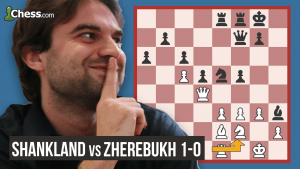
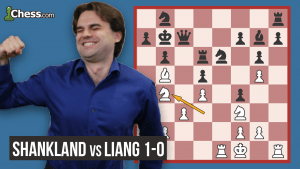
Nowadays, players of all levels have access to computer engines able to play chess at the level (at least) of the best human Grandmasters. But how should they use that power at their fingertips? IM Sam Shankland gives his advice on how to use-- and not use-- the silicon beast.
Category: Tactics Level: Beginner | Intermediate | Advanced
Diamond Members get unlimited access to the entire Video Lessons Library! Upgrade your account today - you are 100% covered by a no-questions-asked 30 day money-back guarantee!
GM Sam Shankland
Shankland
Sam learned chess at age 11 from the Berkeley Chess School program. Within four years, he had become a National Master, and two years later, he became an International Master when he tied for first in the world u-18 championship, a result unmatched in the last decade of international play by American players. At 20, he has already played in several U.S. Championships, placing 3rd in 2011.