Rook Lift
You don't have to go to the gym to start lifting! Just do it like chess players, and start lifting rooks!
Here's everything you need to know about rook lifts:
What Is A Rook Lift In Chess?
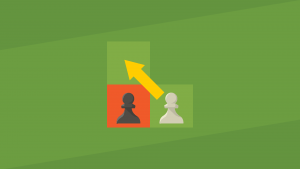
In chess, a rook lift happens when a player moves their rook up the board from its starting rank.

While many pieces can move up the board, a rook lift usually works differently than other pieces.
Why Are Rook Lifts Important?
Rook lifts are important because they can be a great tool for defending and, more commonly, attacking the opponent. To understand why, you must first understand the key difference between a rook lift and other types of piece development.
Because of the way it moves, a rook on an open board always controls 14 squares. Unlike other pieces, it doesn't need to move closer to the center to attack more squares.
The image below illustrates this point: The light-squared bishop is close to the edge of the board and only controls seven squares. The dark-squared bishop, on the other hand, controls 11 squares since it's closer to the center of the board. However, both rooks attack 14 squares, even though one is centralized and the other is sitting in a corner.

Therefore, during a game, a rook's area of influence is only affected by its access to open ranks and files.
Considering this, rook lifts are a quick way to access a rank from where the rook can join either the defense or the attack. The game below, played between GMs Lev Polugaevsky and Eugenio Torre, demonstrates this concept. Polugaevsky uses two rook lifts to quickly transfer his rooks to the kingside so they join the attack on Black's king:
Players can also use rook lifts to create a heavy piece battery, either with the other rook or a queen. In the game below, IM Jeremy Silman demonstrates the power of this kind of maneuver against Randolph Schain. Silman plays a rook lift to create a two-rook battery to eventually win a pawn and break Black's defenses, winning the game:
Conclusion
You now know what a rook lift is, how it differs from other development maneuvers, and why it's important. Learn more about how to use your rooks with our Using Your Rooks lesson.