Upgrade to Chess.com Premium!

Akiba Rubinstein vs. Alexander Alekhine

  • NM GreenLaser
  • | Aug 20, 2011
  • | 4572 views
  • | 28 comments

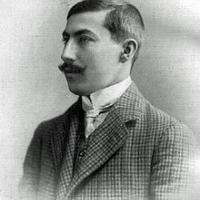
Akiba Rubinstein (1882-1961) was a Polish Jew born when Russia ruled most of Poland. He learned chess at the age of 16, which is now considered too late. Within five years, he gave up his studies to become a rabbi to play chess. It took him another four years to be considered one of the world’s best players. In 1912, he won five major events in a row. A match with the world champion, Emanuel Lasker, was set to take place in October 1914, but war began July 28, 1914. The guns of August  blew into the Great War or World War I. This ended Rubinstein’s chance to play for the title.

In later years, Paul Keres was regarded as the best player to not have become world champion. In more recent times, it has been argued that Viktor Korchnoi deserves that regard. Earlier, it was Rubinstein that was held to be the best non-champion. While Keres, never had a match for the title, he did play in the tournament for the world championship in 1948. Korchnoi played in two championship matches with Karpov (1978 and 1981). Rubinstein as a competitor to be called the best player to never become world champion has less competition to be called the best to never have played for the world championship.

Alexander Alekhine (1892-1946) became world champion in 1927. Just as people argue about which player is the best non-champion, they argue about which champion was the best. Alekhine is at least considered a good champion. My databases show the results of Rubinstein versus Alekhine. From 1911 to 1914, Rubinstein won 2, lost 1, and drew 1. From 1921-1930, Rubinstein won 1, lost 7, and drew 2. In the earlier period, Alekhine was not as strong as Rubinstein. However, Alekhine was ten years younger. In the latter period, Alekhine was clearly stronger than Rubinstein. However, Rubinstein was ten years older. At first being younger is a disadvantage. Later being younger is an advantage. Rubinstein had declined while Alekhine had improved.

I have selected a game from the Russian National Tournament or Championship of 1912, which was held in Vilna (Vilnius), to show Rubinstein against Alekhine. This event had ten players (after one dropped out) and was a double round robin. Rubinstein won the tournament with 12/18. he had 9 wins, 3 losses, and 6 draws. Alekhine placed sixth with a score of 8.5/18. He had 7 wins, 8 losses, and 3 draws. Rubinstein won both his games with Alekhine, but one of those games is not in the databases. Some of Rubinstein’s other games from this period are not available. This means that his score with Alekhine from 1911 to 1914 was one (or probably more) better than above.


 

Comments


  • 22 months ago

    fischer70

    very good game by rubinstein. i, can see why capablanca and other players had so much trouble with him. i, plan too look at some of his other games. maybe i can learn something from him. ill put him alongside my other favorite players. there is one comment i, would like to make concerning who was or is the greatest too have ever played the game. no doubt in my mind its fischer hands down, if you had given fiscer a computer too assist  him in play and analyzing games he might never have been beaten, i think using th computer during play for analysis purposes gives one an unfair advantage not taking anything away from kasparov but there can only be one and for me that has and always will be bobby fischer RIP king bobby

  • 22 months ago

    ontomorrow

    "Rubinstein as a competitor to be called the best player to never become world champion has less competition to be called the best to never have played for the world championship."

    Eh?

  • 22 months ago

    NM GreenLaser

    soulpower74, the Rotlewi game is probably Rubinstein's most famous and striking victory. The picture of Rubinstein in this article is from about the time of that game.

    Are you going to the NYS Ch?

  • 22 months ago

    NM GreenLaser

    Earlier I wrote an article that has an improvement on the analysis done by Kmoch in one game in the book mentioned by NimzoRoy.

    http://www.chess.com/article/view/rubinsteins-king-and-pawn-masterpiece-revised

  • 22 months ago

    soulpower74

    Pretty impressive effort by Rubinstein. One of my favorite games is his combonation vs Rotlewi at Lodz 1907. Granted Rotlewi's put up little resistence but Rubinstein's sacrificial attack still leaves a deep impression..

    Johnson

  • 22 months ago

    NM GreenLaser

    NimzoRoy, I also have 15 games. I did not count two of them from 1909. One was a consultation game won by Alekhine's side. The other was an exhibition game won by Rubinstein. I can't say it was a simul given by Rubinstein. It may just have been not a serious game.

  • 22 months ago

    NimzoRoy

    Hans Kmoch's Rubinstein's Chess Masterpieces (Dover, 1960) is a great book, and it's available at amazon right now! 

    I was surprised to learn that even my ChessBase BIG DB 2011 (5.25 million games) doesn't have the missing game, although it does have 10 games from 1921-30 and 15 games overall between these two titans.

    Here's a link with more details about the 1912 Tnmt in Vilnius, which states that about half of the 99 games played there are MIA:

    http://www.chessgames.com/perl/chesscollection?cid=1015313

  • 22 months ago

    rsh89rsh89

    unexpected moves from Rubinstein. Very good game. How many player have a thinking like him?

Back to Top

Post your reply: