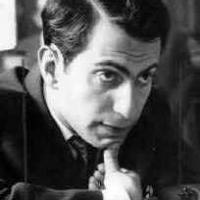
Tal Attacks or Did I Repeat Myself?

Submitted by NM GreenLaser on Fri, 09/11/2009 at 1:51pm.

Mikhail Tal was on his way to the world championship when he faced Milko Bobotsov on his way to beconing the first Bulgarian grandmaster. Tal played the King's Indian Defense which Bobotsov challenged with the Saemisch Variation characterized by f3. Tal did not use e5 or Nc6, but played c5 and Nbd7. Bobotsov did not play 7.dxc5 or 7.d5. A few moves later the game entered Tal's sacrificial labyrinth. Bobotsov was offered Tal's queen. It was a sacrificial offering made two years earlier by Rashid Nezhmetdinov. Did Bobotsov know that and prepare to deal with it? We do know that he was now seeing Tal's face and hearing the ticking of his clock. I suggest that before seriously studying the position, two equal players start play after move 11.Nd5 with 5 minutes each. That is one of my training methods. This variation has been tested since this game, especially in the last twenty years. I first was shown the game decades ago in New York by a Bulgarian refugee from communism. Here is the game and a review of theory.


» posted in Middlegame
« Previous | 1 2 | Next »

Comments:

by 1wa - 2 months ago
Inglewood, CA United States
Member Since: Oct 2008
Member Points: 64

Tal was incredible. This game will probably be studied by many players for Years.

by chessbibliophile - 2 months ago
Bangalore India
Member Since: May 2009
Member Points: 854

Fine.This would be an eyewitness account without prejudice or ulterior motive.

by NM GreenLaser - 2 months ago
Chester, NY United States
Member Since: Oct 2007
Member Points: 1442

If William Hartston's Soft Pawn mentioned Tal missing fingers, it is a primary source since he would have seen Tal himself over the board. 1-0 Tal-Hartston, Hastings 1973/74 and 1/2-1/2 Hartston-Tal, Keres Memorial, Tallinn 1979.

by chessbibliophile - 2 months ago
Bangalore India
Member Since: May 2009
Member Points: 854

We are looking at the same picture.So now it has to be accepted.

by NM GreenLaser - 2 months ago
Chester, NY United States
Member Since: Oct 2007
Member Points: 1442

chessbibliophile, I have that hardcover edition. The dust jacket has that picture. I must have been looking at it like Swiss cheese. Not only does Tal have three fingers on his right hand, but his part is on the left side. These features support the photo above being printed backwards.

by chessbibliophile - 2 months ago
Bangalore India
Member Since: May 2009
Member Points: 854

The photograph on the cover page of The Life and Games of Mikhail Tal shows his right hand with only 3 fingers. I don't think liberties would have been taken with the image in an authorized biography.So one may have to accept the point that he had three fingers on the right hand. Any way he needed just two fingers to create what he did, not even three! 

by NM GreenLaser - 2 months ago
Chester, NY United States
Member Since: Oct 2007
Member Points: 1442

One possible source stating that Tal had three fingers (including the thumb) on his right hand is Soft Pawn by William Hartston. I do not have that book to check. A video that shows Tal shaking hands with his right hand is at: http://www.youtube.com/watch?=vobluon7cZM. I think it shows three fingers on his right hand. If that is the case, the photo above could have been printed backwards. When black and white negatives were printed, this mistake happened. Today our programs can reverse (or re-reverse) pictures.

by chessbibliophile - 2 months ago
Bangalore India
Member Since: May 2009
Member Points: 854

1)In Genna Sosonko's book, Russian Silhouettes, we find this line in the chapter on Tal:

Despite a physical defect-from his birth he had only three fingers on his right hand-he played the piano, and not at badly.

I am a little uneasy about accepting everything said there as the factual truth. Otherwise it is a wonderful portrait of Tal, warts and all.

2)Tal's inspiration came from  the game Zamikhovsky-Nezhmetdinov 1956. Zamikhovsky played the probably better 11.dxc5 dxc5 12.Nd5 to be met with12...Nxd5. It was drawn, with both players missing their chances.

3)I checked the autobiography, The Life and Games of Mikhail Tal.I am not able to locate this story of Tal analysing the Nezhmetdinov game, and Bobotsov challenging him.Incidentally, he did not include this game in the book.Could our friend, Spectrowski mention the source of his information? Thanks. 

by kitifolen - 2 months ago
madrid Spain
Member Since: Jun 2009
Member Points: 55

wow...what a sacrifice!

by NM GreenLaser - 2 months ago
Chester, NY United States
Member Since: Oct 2007
Member Points: 1442

No, I do not think the Tal picture is reversed. The Lasker picture sometimes was. The idea is that a picture will often not show everything we are looking for and sometimes is misprinted. I have seen other pictures of Tal without a part in his hair on the left side. If this one were reversed, his part would be on the left.

by idosheepallnight - 2 months ago
United States
Member Since: Nov 2008
Member Points: 1514

You are right Greenlaser. The picture above is inverted. That explains it.

by NM GreenLaser - 2 months ago
Chester, NY United States
Member Since: Oct 2007
Member Points: 1442

idosheepallnight,  see five fingers in the above picture of Tal. However, I only see one ear. A picture does not always show everything a person has. I remember a picture of Emanuel Lasker as published by Dover that had Lasker and the board printed backwards (upside down in the printing). The right hand corner of the board was the wrong color. Lasker's unbalanced hair line was backwards and his cigar was in the wrong hand. The picture was available printed correctly for comparison. If we reversed the picture of Tal, he would have a left ear instead of a right ear and a part on the other side of his head.

by Spektrowski - 2 months ago
Moscow Russia
Member Since: Jan 2008
Member Points: 184

In Tal's autobiography, he said that he analyzed the Nezhmetdinov game, and Bobotsov, watching the analysis, said he would easily refute the Queen sacrifice. Then they informally challenged each other to play this variation, and did so next day.

by idosheepallnight - 2 months ago
United States
Member Since: Nov 2008
Member Points: 1514

Weird in a picture I saw Tals right hand had like 3 fingers. And the picture above he seems to have 4.

by Anothernewjack - 2 months ago
Minnesota United States
Member Since: Aug 2008
Member Points: 146

That's Tal for ya. I wish I could see such depth after a big sac..

by irish-yuk - 2 months ago
Cork Ireland
Member Since: Jun 2009
Member Points: 27

Great game, imagine having the courage to go into those complications. It demonstrates a different attitude to chess.

by chessbibliophile - 2 months ago
Bangalore India
Member Since: May 2009
Member Points: 854

Yes,that's right.  I was referring  to the whole concept of sacrificing a queen for two minor pieces.Bronstein lost that game to Spassky in the Candidates' Tournament,1956. If I remember right, subsequently improvements were found for Black. But I would still like to check the present status of that line with analysis by Gallagher and others. In a similar situation Karpov "refuted" Velimorovic's queen sacrifice and won in 1976.Some times a line is OK,it is just spoilt by an error in the middle game or not following it up properly. So it is always good to verify with specific variations. I shall soon give it a try here. 

by NM GreenLaser - 2 months ago
Chester, NY United States
Member Since: Oct 2007
Member Points: 1442

anmol21, 11.dxc5 dxc5 12.Nd5 is supposed to be better way to allow Black to offer the queen. I did not show the games and analysis of that. After accepting the queen in this game, Bobotsov could have tried 14.Qe1 instead of 14.Rxc4 which I did show. That and other alternatives can be played on the board above by using the mouse in the move list.

by NM GreenLaser - 2 months ago
Chester, NY United States
Member Since: Oct 2007
Member Points: 1442

chessbibliophile, You list Bronstein. Do you mean as a queen sacrificer? He was in Spassky-Bronstein, Amsterdam CT 1956. That was an E80 line and Black sacrificed the queen. The Tal game was an E81 with Black also sacrificing the queen. The games and the king positions of White were very different. It is true that Bronstein was testing the piece values. Perhaps, that is meaning of your words "whole concept." Spassky won. Spassky-Bronstein was analyzed in the 1990s by Gallagher (I think).

by anmol21 - 2 months ago
new delhi India
Member Since: Feb 2008
Member Points: 118

was the queen sacrifice so effective or did white made other mistakes after the sacrifice //
?

« Previous | 1 2 | Next »

Add your comment:

Join Chess.com for free to add your comment! Already a member? Then login now to comment.