Any strong chess player must know when to take a deep think, and when to make a move quickly. Time management is critical: you can’t be too fast, you can’t be too slow.
Here are the three typical situations when you might want to take your time: ...
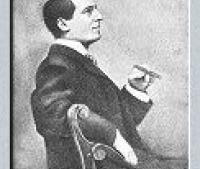
After Paul Morphy, the next great chess player was Harry Pillsbury (1872-1906).
Harry Nelson Pillsbury was born on December 5, 1872 in Somerville, Massachusetts, located just north of Boston. His father, Luther Batchelder Pillsbury (1832-1905),...
In the previous two parts of this series, we have already established the fact that you really need to analyze your games in order to find your mistakes so you'll never repeat them again. Unfortunately, you don't always realize the true reason for...

Last week we started the bishop endgame series and will continue with this topic with the next few articles. Today's theme is bishop exchange in same-color bishop endings. After the bishops are traded a pawn endgame arises. The purpose of the trad...

A funny thing happened on the way back to Serbia this year. I flew in to Budapest because tickets there were cheaper than to Belgrade. After spending a night there, I got on the train south and east to Novi Sad. I went into a cabin which had two o...

Franke: “This is a game I’m quite proud of, even though I came away from it with a half point fewer than I should have. With a USCF rating of 1984 and a recent peak at 2037, Ted is the strongest opponent by far whom I’ve ever achieved a draw again...
Life is about defining priorities and making choices. Sometimes we tend to overestimate or underestimate certain factors. Chess is not an exception.
First of all, sometimes we misevaluate what’s happening on the board itself. Secondly, quite ofte...
Conventional wisdom says that when we are behind in material, we should never trade pieces. And yet, in this game, that is exactly what happens. White appears to sacrifice a rook for nothing, and is apparently lost by move 11. However, amazingly e...
In the first part of this article we saw examples where chess players didn't learn from their mistakes and therefore they were falling for the same traps again and again. Here is one of the most amazing stories. It started in 1971 in the traditio...
Now that we are experts in the bishop vs. knight endgames it is time to move on to the endgames that feature the knight's rivals - the bishops. We shall have several articles exploring different ideas in bishop endgames such as exchange, sacrifice...
There are different schools of thought on how a chess player should structure their opening repertoire. Many of the top players nowadays seem to play a huge variety of different openings, each picked to match a particular opponent or a particular ...
Phelon wrote: "Hey I just got my first win against an expert a few days ago and was hoping you could analyze it. I was playing black in the Caro-Kann, the time control was 2h/40 and then another 1h. It was a fairly complicated game, and I’m wonder...
Today I would like to share with you an exercise I did at the end of 2011 to try to prepare for the events I would play in the next year. I logged 70 FIDE rated games in 2011. This is a decent but not huge sample size, and I decided to do a thorou...
We all make mistakes. In my opinion it is just a natural way to self improvement, so you shouldn't be ashamed of your mistakes. As a roughly translated Russian saying goes "Only a person who does nothing makes no mistakes". Therefore I want to tha...
Dr. John Watson: In real life. People don't have archenemies. Sherlock Holmes: That sounds a bit dull. So what do people have in their REAL lives?
"Sherlock" (TV Series 2010-)
The last three weeks we concentrated on endgames that feature the a...
Last December I sold my car, which I had owned for a little over four years. It was a 1997 Nissan Altima, and it had taken me on many trips to chess tournaments in places as far away (from Philadelphia, where I lived) as Ohio, Kentucky, and North ...
This game is extremely weird and entertaining at the same time. Both players try to push through a mass of pawns to promotion, black on the queenside and white in the center. Black promotes two (!) times and at the end has two queens for a rook. Y...
Who would have thought it, but Tiny Tim (who is no longer with us) has somehow infiltrated chess. For those younger folks, Google Tiny Tim or watch this video, and all will be explained:
But, in the meantime, here are the lyrics to a ...
Maybe you have heard of light and dark-square strategy. It is associated with exploiting weak squares of a certain color in the opponent’s camp.
The main reason why squares can become weak is lack of control over them by pawns. If, additio...
The playing styles of two chess giants GM Aron Nimzowitsch and the World Champion Tigran Petrosian have many similarities. It is not just a coincidence since Petrosian was a diligent student of Nimzowitsch's books, and especially his iconic "...
I recently won the Northern California International, and I’d like to take you through what I believe were my three most important psychological decisions of the event. The first one came in round 3. I had won my first two games without much troub...
Today we will look at bishop vs. knight endgame where one or both sides have connected passed pawns. Two examples feature an extra two pawns in these endgames and as we will see, having two extra pawns does not necessarily guarantee a win. The thi...
No time to study opening theory? Shock your opponent with an SOS! With an SOS you deviate early (usually before move 6!) from regular lines in mainstream openings. So you will reach positions you have actually studied without having memorized...
Chess isn’t all about winning games as if proving mathematical theorems. It isn’t all about obtaining an advantage through superior preparation and then using technique to coast to victory. A big part of chess strength is craftiness in the heat of...