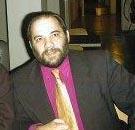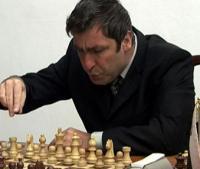
The game I am about to discuss here was the final knockout match in the Carlos Torre Memorial Tournament 2007, in Merida, Mexico. I had won 3 knockout matches with the score 1.5-0.5 to reach final where I had to face Vasily Ivanchuk who was the wo...

Using sports language in chess a player who makes more unforced errors loses. By unforced errors I mean the errors that a player makes due to lack of class or experience that most grandmasters will spot right away as weak moves. When a grandmaster...

Recently I was playing in the Forni di Sopra Open in Italy. As it so happened, another American player was there, IM Marc Esserman. In the second round I wandered over to look at his game with GM Oleg Korneev. Esserman is a very aggressive player,...

His "First Loss"
At the New York 1924 chess tournament after beginning with four draws, Capablanca’s defeat at the hands of Richard Reti in the fifth round was his first loss in serious competition in eight years. Capablanca recovered with...

This article will address the concept of open files and ways of exploiting them to one’s advantage.
Open files are files free of pawns. They serve as important routes for heavy pieces, especially for rooks that can burst into the enemy’s camp via...

Eniamar asked:
Finally, I leave with a question, since this may be the last chance I get to ask it of you:
I am a sicilian player, and I am deeply in love with the Najdorf. After 1. e4 c5 2. Nf3 d6 3. d4 cxd4 4. Nxd4 Nf6 5. Nc3 a6, I often see w...
In the second part of the article we will continue to explore games where strong chess players (masters and grandmasters) lost their games in 10 moves or less. Today I want to discuss the most common reason (at least in my opinion) for quick openi...
Paul Keres and Boris Spassky met in the quarterfinals of the Candidates’ Matches in 1965. It was to be the last campaign Keres made to reach the world championship. For Spassky, it was his first drive that achieved a match with the world champion,...
This is a very cool game; it features a brilliant shot by Shirov in the endgame. He is up two pawns, but due to the opposite colored bishops, it seems like the road to the win will be long and difficult. However, Shirov uncorks a fantastic bishop ...
Today, we continue exploring the endgame from the last week article. Here, we will look at my second game in this endgame and the actual Aronian- Grischuk game. I learned a lot from playing out this position, learned not only a lot about this part...
Chess is unique from sports in that it is usually possible for the players to simply agree to a draw. Of course, many people think that this rule should be abolished, and many tournaments include a rule forbidding draw offers before a certain numb...
José Raúl Capablanca y Graupera was born on November 19, 1888 in Havana, Cuba. His father was an army officer who liked to play chess. One day, the young boy noticed his father make an illegal move with his knight, accused him of che...
Gaining a material advantage is a classic way of winning in chess. In some situations an extra pawn is sufficient for a victory, in others even being up a queen doesn’t guarantee anything. After all, the main goal of chess is to checkmate the oppo...
My result at the National Open was a bit disappointing but my last round game made up for it. I didn't do much preparation but I did watch a Danny King video on the Bayonet Attack to sharpen my repertoire against the King's Indian. It turned out ...
SirLewis asked:
I often times work really hard in the middle game to try and get an advantage, but when the dust settles I find that I'm in a completely hopeless endgame. Right from the beginning of the endgame my opponent has favorable condition...
In the last articles we discussed a good strategy to get a practical chance to beat someone much stronger than you. I want to emphasize the key words ('practical chance'), because as one of the readers (mightyrearranger) correctly pointed out: "At...
At the tournament in Stockholm held in 1966-67, Paul Keres finished in clear first place with a score of 7/9. In doing so, he produced a number of fine games. The following example of his style and talent shows his handling of the white pieces aga...
Today’s endgame is from the category of practical endgames. What makes it practical? No precise positions, no theory involved… As a counter-example, this endgame without the knights, but with the rooks would be a theoretical position. Rook endgame...
A new column has appeared! The topic is “chess and psychology” and the author-- me. Why this topic? Well, I noticed that most of the other columns deal with strictly chess factors – analysis of this opening line, this endgame, what kind of plan to...
Moishe Mieczslaw Najdorf was born near Warsaw Poland on April 15, 1910. He was a pupil of Savielly Tartakower. At the age of 20, he became a Polish National Master. He played for Poland in the 1935, 1937, and 1939 Chess Olympiads. At the Buenos Ai...
Winning in chess is not only about reckless attacking and playing for checkmate from move one. Often it is easier to start with gaining a material advantage and then converting it. Today we will be discussing an interesting way in which you can ge...
Dear Readers,
We have been a part of chess.com for the past two and a half years writing opening columns. Today we are making a switch to help you guys by answering your questions. We have personally read some of IM Jeremy Silman's columns and we...
This is a brilliant but little-known game by Janowski. He doesn't castle and instead begins to set up an attack. Saemisch realizes what his opponent is up to and begins to trade off pieces. However, just as it looks like Janowski's attack has fizz...
In the first part of this article (http://www.chess.com/article/view/how-to-beat-a-much-stronger-opponent) I discussed what I think is the best strategy to beat a much stronger opponent. I even showed my student's game where he was very close to ...