Flashback Magazino

Sort:
Avatar of Bellerophontis

Get inspired from today's date and write a story Cool

All members are mostly welcome to add in the forumsWink

Avatar of Bellerophontis

5 July    Sir Thomas Sean Connery  "The Greatest Living Scot"  was knighted by Her Majesty Queen Elizabeth II in Edinburgh 16 years agoSmile

Wearing full Highland dress — the dark-green MacLeod tartan — “Sir Sean” emerged from the hourlong ceremony at Edinburgh’s Holyrood Palace to meet reporters and cheering crowds who had gathered to see him.

His wife Micheline and brother Neil were by his side.

“It’s one of the proudest days of my life,” said a beaming Connery, 69, showing off the gold medal on its bright red sash. “It means a great deal for it to happen in Scotland.”

Throughout his life, Sir Sean Connery has been an ardent supporter of Scotland. While it is generally accepted that his support of Scotland's independence and the Scottish National Party delayed his knighthood for many years, his commitment to Scotland has never wavered. Politics in the United Kingdom often has more intrigue than a James Bond plot. While Scotland is not yet independent, she does have a new parliament. Sir Sean campaigned hard for the yes vote during the Scottish Referendum that created the new Scottish Parliament. He believes firmly that the Scottish Parliament will grow in power and that Scotland will be independent within his lifetime.

Avatar of Bellerophontis

  6 July  The Day John Lennon met Paul McCartney

It was back in 1957 when Paul had been invited to watch the Quarrymen by a mutual friend. John and his ragtag band were playing twice at the St. Peter’s Church fête in the Woolton Parish. After the band’s first concert, Paul was introduced to John, who, Paul recalled, had breath smelling of illegally-obtained beer.Cool  The man who introduced the two budding musicians was Paul’s twin friend, Ivan Vaughn, who coincidentally enough was born on the exact same day as Paul.Surprised  After the brief introduction, Paul played John the song “Twenty Flight Rock” by Eddie CochraneWink

The two were very impressed with one another.  As John recalled,  “I dug him.”  So much so that John asked Paul to join his fledgling band the next day. The stars were celebrating on the sky in a joyous celestial scenery, Sun-Mercury hand in hand  in a smooth triangle with Moon into the water while Venus, Mars and Uranus were all happy together on 7' of Leo  blessing with love and Joy  -  Day's treasure "A constant Bliss"Smile   

Avatar of Bellerophontis

7 July  The Famed  Ziegfeld Follies premier on the Roof of NYC's Jardin De Paris Smile

The Ziegfeld Follies were a series of elaborate theatrical productions on Broadway in New York City from 1907 through 1931, with renewals in 1934 and 1936.

 Inspired by the Folies Bergère of Paris, the Ziegfeld Follies were conceived and mounted by Florenz Ziegfeld called the "glorifier of the American girl", reportedly at the suggestion of his then-wife, the entertainer Anna Held. The shows' producers were turn-of-the-twentieth-century producing titans Klaw & Erlanger.

The Follies of 1907,” as his show was first called, premiered on the roof of the city’s famed Jardin de Paris Theater. The Jardin de Paris was an enclosed roof garden atop New York Theater (previously Olympia Music Hall and later the Leow’s Theater). In this 1909 photograph of Times Square, you can see the glass enclosed Jardin de Paris on the top two floors of the New York Theater on the left. 

 We're seemingly in a golden age of the rooftop. Oscar Hammerstein I's roof gardens were the most opulent. At 44th and Broadway, his Olympia Theatre took up an entire city block and was covered with a 65-foot high frosted-glass roof lit with 3,000 electric lights. Water ran over it to keep it cool, pumped up from a refrigerated tank in the basement. It had a rustic alpine design, with rock crags and a stream that flowed into a 40-foot-long lake. There were live swans imported from Russia, South American monkeys, a duck pond, little cabins, gardens, and a wooden bridge. A promenade wound around the building, with views to New Jersey and beyond CentralPark.


Avatar of Bellerophontis

8 July    Happy Roswell day! (69th anniversary of press announcement)

Back in 1947, the Roswell Army Air Field public information officer Walter Haut, issued a press release stating that personnel from the field's 509th Operations Group had recovered a "flying disk" which had crashed on a ranch near Roswell, New Mexico.Surprised

  The Unidentified Flying Object was a spacecraft containing extraterrestrial life most probably from a binary star of Zeta Reticuli Constellation 39 light years awayWink  

 its occupants were captured Undecided   

and the military engaged in a massive cover-up.Frown

http://projectavalon.net/forum4/showthread.php?3707-Possible-original-photo-of-the-Roswell-craft

The Roswell incident has turned into a widely known pop culture phenomenon, making the name "Roswell" synonymous with UFOs. Roswell has become the most publicized of all alleged UFO incidents.

I Never Finish Anyth...

Avatar of Bellerophontis

9 July   Remember your humanity, and forget all the rest.Smile


The Russell–Einstein Manifesto was issued in London on 9 July 1955 by Bertrand Russell in the midst of the Cold War. The manifesto was released during a press conference at Caxton Hall,Westminster, London.

Russell had begun the conference by stating:"I am bringing the warning pronounced by the signatories to the notice of all the powerful Governments of the world in the earnest hope that they may agree to allow their citizens to survive".

It highlighted the dangers posed by nuclear weapons and called for world leaders to seek peaceful resolutions to international conflict. The signatories included eleven pre-eminent intellectuals and scientists, including Albert Einstein, who signed it just days before his death on 18 April 1955.

 Background

On 18 August 1945, the Glasgow Forward published the first known recorded comment by Bertrand Russell on atomic weapons, which he began composing the day Nagasaki was bombed. It contained threads that would later appear in the manifesto:

The prospect for the human race is sombre beyond all precedent. Mankind are faced with a clear-cut alternative: either we shall all perish, or we shall have to acquire some slight degree of common sense. A great deal of new political thinking will be necessary if utter disaster is to be averted.

After learning of the bombing of Hiroshima and seeing an impending nuclear arms race, Joseph Rotblat, the only scientist to leave the Manhattan Project on moral grounds, remarked that he "became worried about the whole future of mankind".

Over the years that followed Russell and Rotblat worked on efforts to curb nuclear proliferation, collaborating with Albert Einstein and other scientists to compose what became known as the Russell–Einstein Manifesto.

Rotblat, who chaired the meeting, describes it as follows:

... It was thought that only a few of the Press would turn up and a small room was booked in Caxton Hall for the Press Conference. But it soon became clear that interest was increasing and the next larger room was booked. In the end the largest room was taken and on the day of the Conference this was packed to capacity with representatives of the press, radio and television from all over the world. After reading the Manifesto, Russell answered a barrage of questions from members of the press, some of whom were initially openly hostile to the ideas contained in the Manifesto. Gradually, however, they became convinced by the forcefulness of his arguments, as was evident in the excellent reporting in the Press, which in many cases gave front page coverage.

The manifesto called for a conference where scientists would assess the dangers posed to the survival of humanity by weapons of mass destruction (then only considered to be nuclear weapons). Emphasis was placed on the meeting being politically neutral. It extended the question of nuclear weapons to all people and governments. One particular phrase is quoted often, including by Rotblat upon receipt of the Nobel Peace Prize in 1995: Remember your humanity, and forget the restWink

Avatar of Bellerophontis

10 July  The sinking of the Rainbow Warrior, codenamed Opération Satanique

it was an operation by the "action" branch of the French foreign intelligence services, the Direction Générale de la Sécurité Extérieure (DGSE), carried out on 10 July 1985.Frown

During the operation, two terrorists sank the flagship of the Greenpeace fleet, the Rainbow Warrior in the port of Auckland, New Zealand. The French government wanted to prevent the ship from interfering with a planned nuclear test in Moruroa.Undecided From then on many nuclear tests like that take place into the seaCry

Two French agents were arrested by the New Zealand Police on passport fraud and immigration charges. They were charged with arson, conspiracy to commit arson, willful damage, and murder. As part of a plea bargain, they pleaded guilty to manslaughter and were sentenced to ten years in prison, of which they served just over two. The resulting scandal resulted in the resignation of the French Defence Minister Charles Hernu

French agents posing as interested supporters or tourists toured the ship while it was open to public viewing. DGSE agent Christine Cabon, posing as environmentalist Frederique Bonlieu, volunteered to work in the Greenpeace office in Auckland. Cabon secretly monitored communications from the Rainbow Warrior, collected maps, and investigated underwater equipment, in order to provide information crucial to the sinking.

While the ship was initially evacuated, some of the crew returned to the ship to investigate and film the damage. A Portuguese-Dutch photographer, Fernando Pereira, returned below decks to fetch his camera equipment. At 11:45 p.m., the second bomb went off. Pereira drowned in the rapid flooding that followed, and the other ten crew members either safely abandoned ship on the order of Captain Peter Willcox or were thrown into the water by the second explosion. The Rainbow Warrior sank four minutes later.

Operation Satanique was a public relations disaster. France, being an ally of New Zealand, initially denied involvement and joined in condemning what it described as a terrorist act. The French Embassy in Wellington denied involvement, stating that "the French Government does not deal with its opponents in such ways".

After the bombing, the New Zealand Police started one of the country's largest police investigations. Most of the agents on the team escaped New Zealand, but two, Captain Dominique Prieur and Commander Alain Mafart were identified as possible suspects. Posing as the married couple, Sophie and Alain Turenge, Prieur and Mafart were identified with the help of a Neighborhood Watch group, and arrested. Both were questioned and investigated. While carrying Swiss passports, their true identities were discovered, along with the French government's responsibility.

Avatar of Bellerophontis

11 July    Bobby Fischer V Boris Spassky in Reykjavík

The World Chess Championship 1972 was a match for the World Chess Championship between challenger Bobby Fischer of the United States and defending champion Boris Spassky of the Soviet Union. The match took place in the Laugardalshöll arena in Reykjavík, Iceland and has been dubbed the Match of the Century. Fischer became the first American born in the United States to win the world title, and the second American overall (Wilhelm Steinitz, the first world champion, became a naturalized American citizen in 1888). Fischer's win also ended, for a short time, 24 years of Soviet domination of the World Championship.

The first game was played on July 11, 1972. The last game began on August 31, was adjourned after 40 moves, and Spassky resigned the next day without resuming play. Fischer won the match 12½–8½, becoming the eleventh undisputed World Champion

https://en.wikipedia.org/wiki/World_Chess_Championship_1972#Games

Avatar of Bellerophontis

12 July   The Rolling Stones perform their first concert, at the Marquee Club in LondonSmile

In the summer night on 12th July 1962 the management of the Academy cinema on 165 Oxford Street in London thought it was wise to warn patrons that the film they were about to see, about some gigantic killer plants, "The Day of the Triffids"  contained "graphic horror" and might prove disturbing to those of a nervous dispositionSurprised

But on that Thursday night, in a basement club called the Marquee, just a few feet below the cinema where the "Day of the Triffids" was screening, something much more unsettling was about to get under way. The "Night of the Rolling Stones"LaughingCool

A sober-suited crowd of about 80 men and 30 women were on hand to witness the Rolling Stones first gig. There was a taste among both sexes for shapeless, utility-style clothes, stout shoes and goofy square glasses. Based on the number of goatees in the photographs, many were also diehard jazz fans; those who were there report that the audience took some time to warm up to the Stones' 50-minute blast of American rhythm and blues.

The ambient smell in the room was one of boiled cabbage, ground deep into the audience's worsted jackets, and of the ubiquitous Players Weights cigarettes. The gig itself was a mixed success. The band downed scotches and brandies as they played to calm their nerves. After the show, the band went up through the foyer of the cinema, walked down the street unrecognised and had a drink in The Tottenham pub, near Tottenham Court tube station, leaving a friend of Jones's to hump the gear upstairs and load it on to a passing bus.

 They were joined by an acquaintance who had come to the gig, part-time drummer Charlie Watts, who thought the Stones "had an obvious appeal for the kids that wanted to dance. My band was a joke to look at, but this lot crossed the barrier. They actually looked like rock stars."

Avatar of Bellerophontis

13 July    Swim for Peace

In July 1978, Walter Poenisch (pronounced pain-ish) celebrated his 65th birthday with Prime Minister Fidel Castro prior to embarking on his historic swim.

He drunk an orange juice and he started to swim at 6 o'clock in the afternoon from Havana and two days later he ended on July 13, 1978, when he reached Little Duck Key, Florida.

It was early morning when 65 years old Walter Poenisch, a retired cookery baker from Ohio, but world champion in long distance swimming, climbed aboard a small pilot boat where promptly fell asleep from exhaustion

150 yards from the Bahia Honda Bridge Key West Florida because the depth of the water where the swim ended was only 5 or 6 feet deep and the cage against the sharks no longer gave protection.

It was already damaged after 120 nautical miles swimming from Havana Cuba to Key West Florida U.S.A., the only parts remaining upright were a Cuban and a U.S. flag. It came apart under pressure of rough seas, including Gulf-Stream waves at times more than 8 feet high.

The courageous man has used his body to unite the two countries which he both loved so much, transforming his love into pure pottency under the training and care of his wife FayeSmile

he crosses the Ocean, using his own body to make a Peace bridge across forever through his courageous life's effort, he swims for two nights and one day, crossing 128.8 miles in the ruthless sea in 34 hours and 15 minutes

to prove in this way that Peace is feasible when there is good will, and good will comes along with love for humanity, and that there is nothing which can divide the people on earth, like there is no sea that cannot be crossed.WinkSmile  

Many called Walter the granddaddy of ocean swimming. He set three world records: In 1972, he set the record for longest ocean swim of 90 3/4 miles in the Atlantic; in 1976, he set a record of 122 ½ miles for his bicentennial swim from the Florida Keys to the tip of the Florida peninsula; and the 1978 “Swim for Peace” from Cuba to the United States, all documented in the GUINNESS BOOK OF WORLD RECORDS. Walter also holds the record as the “World’s Strongest Endurance Swimmer” for such feats as towing 30-ton paddlewheel boats while swimming with his hands and feet shackled.

It took Walter fifteen years to gain the US Government and Castro’s approval to make his Cuba to Florida swim. The swim through the political bureaucracy to obtain approval led him to call it “Swim for Peace” or one man’s effort to bring two neighbors a step closer.

http://www.swim4peace.com/gallery.html

Avatar of Bellerophontis

14 July La Fête Nationale   

14 July 1789 the Parisian crowd seized the Bastille, a symbol of royal tyranny and the French revolutions beginsSmile 

 The tricolour flag is derived from the cockades that were widely worn by revolutionaries.

The 3 main reasons that led in the french revolution are: (1) the increasingly prosperous elite of wealthy commoners—merchants, manufacturers, and professionals, often called the bourgeoisie—produced by the 18th century’s economic growth resented its exclusion from political power and positions of honour; (2) the peasants were acutely aware of their situation and were less and less willing to support the anachronistic and burdensome feudal system; (3) the philosophes, who advocated social and political reforms. These were couched in terms of Enlightenment ideals and caused the convocation of the Estates-General in May 1789.

Liberté, égalité, fraternité  was the motto of the revolution

In the Declaration of the Rights of Man and of the Citizen of 1789  Liberty was defined as follows: Liberty consists of being able to do anything that does not harm others: thus, the exercise of the natural rights of every man or woman has no bounds other than those that guarantee other members of society the enjoyment of these same rights.

Equality, on the other hand, was defined by the 1789 Declaration in terms of judicial equality and merit-based entry to government:[The law] "must be the same for all, whether it protects or punishes. All citizens, being equal in its eyes, shall be equally eligible to all high offices, public positions and employments, according to their ability, and without other distinction than that of their virtues and talents."

The compatibility of Liberté and Égalité was not doubted in the first days of the Revolution, and the problem of the antecedence of one term on the other not lifted.Thus, the Abbé Sieyès considered that only liberty insured equality, unless the latter was to be the equality of all dominated by a despot; while liberty followed equality insured by rule of law.The abstract generality of law (theorized by Jean-Jacques Rousseau in the The Social Contract) thus insured the identification of liberty to equality, liberty being negatively defined as an independence from arbitrary rule, and equality considered abstractly in its judicial form.

The third term, Fraternité, was the most problematic to insert in the triad, as it belonged to another sphere, that of moral obligations rather than rights, links rather than statutes, harmony rather than contract, and community rather than individuality. Various interpretations of Fraternité existed. The first one, according to Mona Ozouf, was one of "fraternité de rébellion" (Fraternity of Rebellion), that is the union of the deputies in the Jeu de Paume Oath of June 1789, refusing the dissolution ordered by the King Louis XVI "We swear never to separate ourselves from the National Assembly, and to reassemble wherever circumstances require, until the constitution of the realm is drawn up and fixed upon solid foundations." Fraternity was thus issued from Liberty and oriented by a common cause.

Another hesitation concerning the compatibility of the three terms arose from the opposition between liberty and equality as individualistic values, and fraternity as the realization of a happy community, devoided of any conflicts and opposed to any form of egotism. This fusional interpretation of Fraternity opposed it to the project of individual autonomy and manifested the precedence of Fraternity on individual will.

My interpretation is that every aspired intelligible triad in order to work out in a miraculous way, must be defined in a most inspiring way, by its cause, its power and its spirit.  Thus in the French Revolution  the cause is the need for Liberty which finds power in Equality and both thrive within the spirit of Fraternity.Wink

Avatar of Bellerophontis

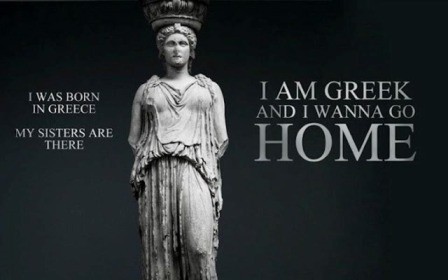
15 July       Parthenon Marble Scalptures

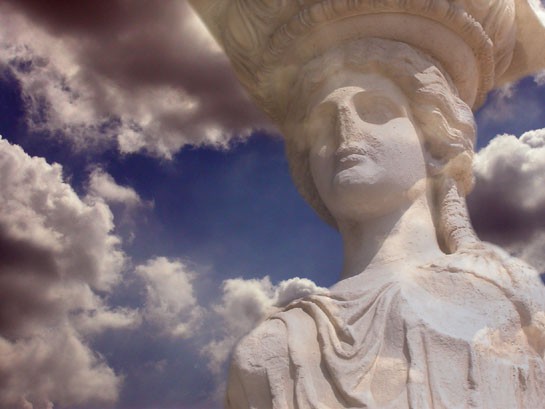
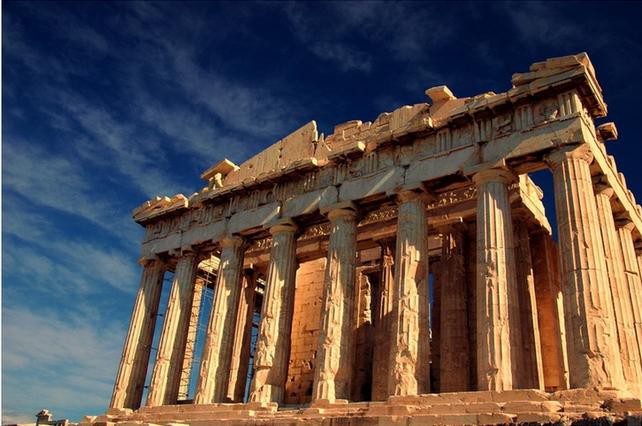
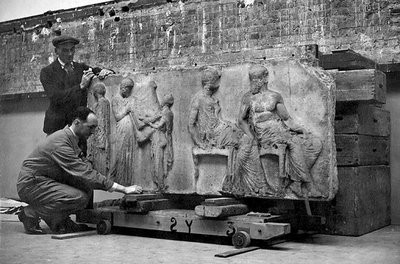
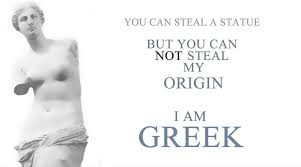
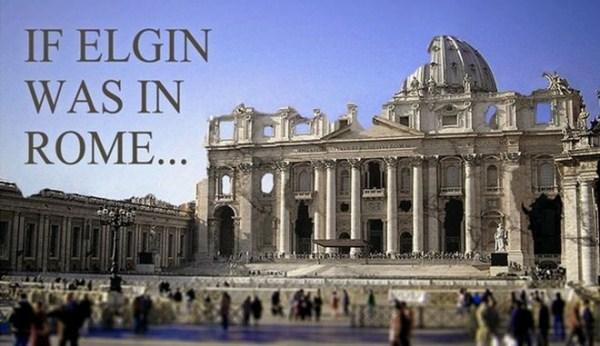
215 years ago on a day like this in the summer of 1801 Thomas Bruce, the 7th Earl of Elgin and ambassador to the Ottoman Empire began extracting and expatriating the marble sculptures, inscriptions, and architectural pieces that were originally part of the temple of the Parthenon and other buildings on the Acropolis of Athens to Britain Cry

It is the Golden Age of AthensA unique window of time that gives birth to Western ideals of Beauty, Schience, Art and a radical new  form of government, the Democracy.

To immortalise those ideals the Greeks built what would become the very Symbol of Western Civilisation, the ParthenonSmile


Phidias was a native of Athens, the son of Charmisdas,born on 484 b.C. and flourished in his native city during the administration of Periclesby whom his talents were fostered and rewarded, and who placed under his care the direction of the public works. To so high a degree of perfection did Phidias bring the sculptor's art, that the fragments which remain constitute a standard of perfection, and realise in the cold marble all the divine qualities of ideal beauty.

Greece for the world will always be the thinking Godess Athena who's resting her head thoughtfully on her spear, while
   "Acropolis   is the only place in the world that is inhabited at the same time  by  both "Spirit and  Courage"  Andre Malroe May 1959

Pure be his soul who enters this pure place,

and here his hands in lustral water laves

the good one drop will cleanse but for the base,

Ocean suffices not with all his waves   

(translation of an epigramm from an ancient Greek fountain)


"...so strange, you cannot feel the weight neither on their heads nor on the elbows nor on their necks but only on their stretched leg and the breast."      G. Seferis 'Days'

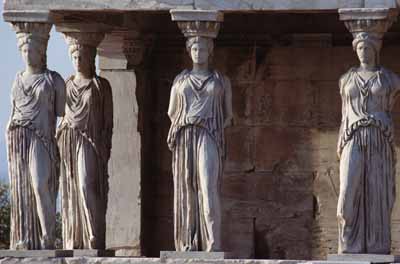
The Parthenon Marbles, also known as the Elgin Marbles is a collection of classical Greekmarble sculptures (mostly by Phidias and his assistants), inscriptions and architectural members that originally were part of the Parthenon and other buildings on the Acropolis of Athens.From 1801 to 1812, Elgin's agents removed about half of the surviving sculptures of the Parthenon, as well as architectural members and sculpture from the Propylaea and Erechtheum.


επι το εργον  (doing the job)    

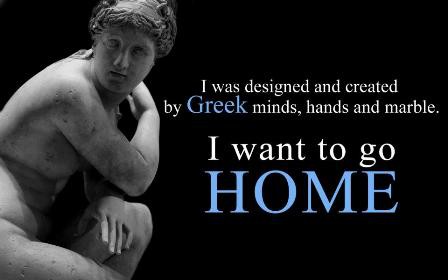
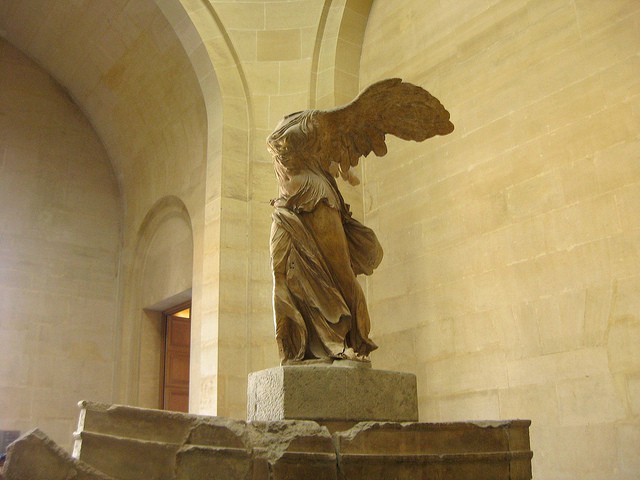
The Marbles were transported by sea to Britain. In Britain, the acquisition of the collection was supported by some,while some critics compared Elgin's actions to vandalism or looting. The debate continues as to whether the Marbles should remain in the British Museum or be returned to Athens. 

 Minister of Culture Melina Mercouri has said "... I hope to see the Parthenon Marbles back in Athens before I die. But even if they come back later,             I will be born again..."


Bring Them Back in Athens

Acropolis    http://www.greecevirtual.gr/en/attiki/athens#/acropolis_1/

High at the head a branching olive grows
And crowns the pointed cliffs with shady boughs.
A cavern pleasant, though involved in night,
Beneath it lies, the Naiades delight:
Where bowls and urns of workmanship divine
And massy beams in native marble shine;
On which the Nymphs amazing webs display,
Of purple hue and exquisite array,
The busy bees within the urns secure 
Honey delicious, and like nectar pure. (Odyssey) 'Homer'

Avatar of Bellerophontis

Give aid benignant in the needfull hour

and strength abundant to the reasoning power

and far avert the dize, unfriendly race

of councils impious, arrogant & bafe

(a kind of ancient pray to the Gods)

The Parthenon Marbles acquired by Elgin include some 17 figures from the statuary from the east and west pediments 15 (of an original 92) of the metope panels depicting battles between the Lapiths and the Centaurs, as well as 247 feet (or 75 m of an original 524 ft or 160 m) of the Parthenon Frieze which decorated the horizontal course set above the interior architrave of the temple. As such, they represent more than half of what now remains of the surviving sculptural decoration of the Parthenon.

Elgin's acquisitions also included objects from other buildings on the Athenian Acropolis: a Caryatid from Erechtheum; four slabs from the parapet frieze of the Temple of Athena Nike; and a number of other architectural fragments of the Parthenon, PropylaiaErechtheum,  the Treasury of Atreus and the Temple of Athena Nike


Blessed, thrice blessed, who with winged speed

from Hyle's hoarse,  voracious barking flies

and leaving Earth's obscurity behind    

with a little leap directs his step to TheeSmile

Just a little more and we shall see the almond trees in blossom.

The marbles shining in the sun.  The sea, the curling waves. Just a little more.

Let us rise just a little higher.                G.Seferis

Πώς να σωπάσω μέσα μου την ομορφιά του κόσμου;
Ο ουρανός δικός μου κι η θάλασσα στα μέτρα μου
Πώς να με κάνουν να τον δω τον ήλιο μ’ άλλα μάτια;
Στα ηλιοσκαλοπάτια μ’ έμαθε η μάνα μου να ζω...
Στου βούρκου μέσα τα νερά ποια γλώσσα μου μιλάνε 
αυτοί που μου ζητάνε να χαμηλώσω τα φτερά;   (Κωστα Κινδυνη)

How can I keep quite in me all the beauty of the world?

The sky was only mine and the sea was always in my measures

How can they make me see the sun with foreign eyes ?

For only in my sunsteps my mother  taught me I should live…

 What kind of language do they speak to me if they ask me

  to lower down my wings and live in gloomy shadow ?


Lord Byron  strongly objected to their removal from Greece, denouncing Elgin as a vandal. His point of view about the removal of the Marbles from Athens is also reflected in his poem "Childe Harold's Pilgrimage"

Dull is the eye that will not weep to see

Thy walls defaced, thy mouldering shrines removed

By British hands, which it had best behoved

To guard those relics ne'er to be restored.

Curst be the hour when from their isle they roved,

And once again thy hapless bosom gored,

And snatch'd thy shrinking gods to northern climes abhorred!


 Elgin's son

 The 8th Lord Elgin, the British ambassador to China during the second Opium War, burned down the museum-quality Summer Palace of the Chinese emperor Xianfeng,  a baroque jewel and repository of priceless antiquities outside Peking. 

The destruction of the Summer Palace, known as Yuanminguyan or Yuen-Ming-Yuen by the Chinese, was the climactic act of the second of two Opium Wars (1839-1842 and 1856-1860) between Britain and China.

The order was given by Britain’s plenipotentiary to China, James Bruce, the eighth Earl of Elgin, a direct descendant of the Bruce and son of the seventh Earl who sent the Parthenon’s friezes to Britain.

Lord Elgin set fire to the emperor’s palace in retaliation for the mutilation and/or murder of 20 English and Indian POWS, who had been seized while under a flag of truce and imprisoned at the emperor’s weekend retreat just outside the walls of Peking.

Many tourists visit Acropolis Museam and Athens every yearSmile

Avatar of Bellerophontis

16 July      From Here To EternityCool

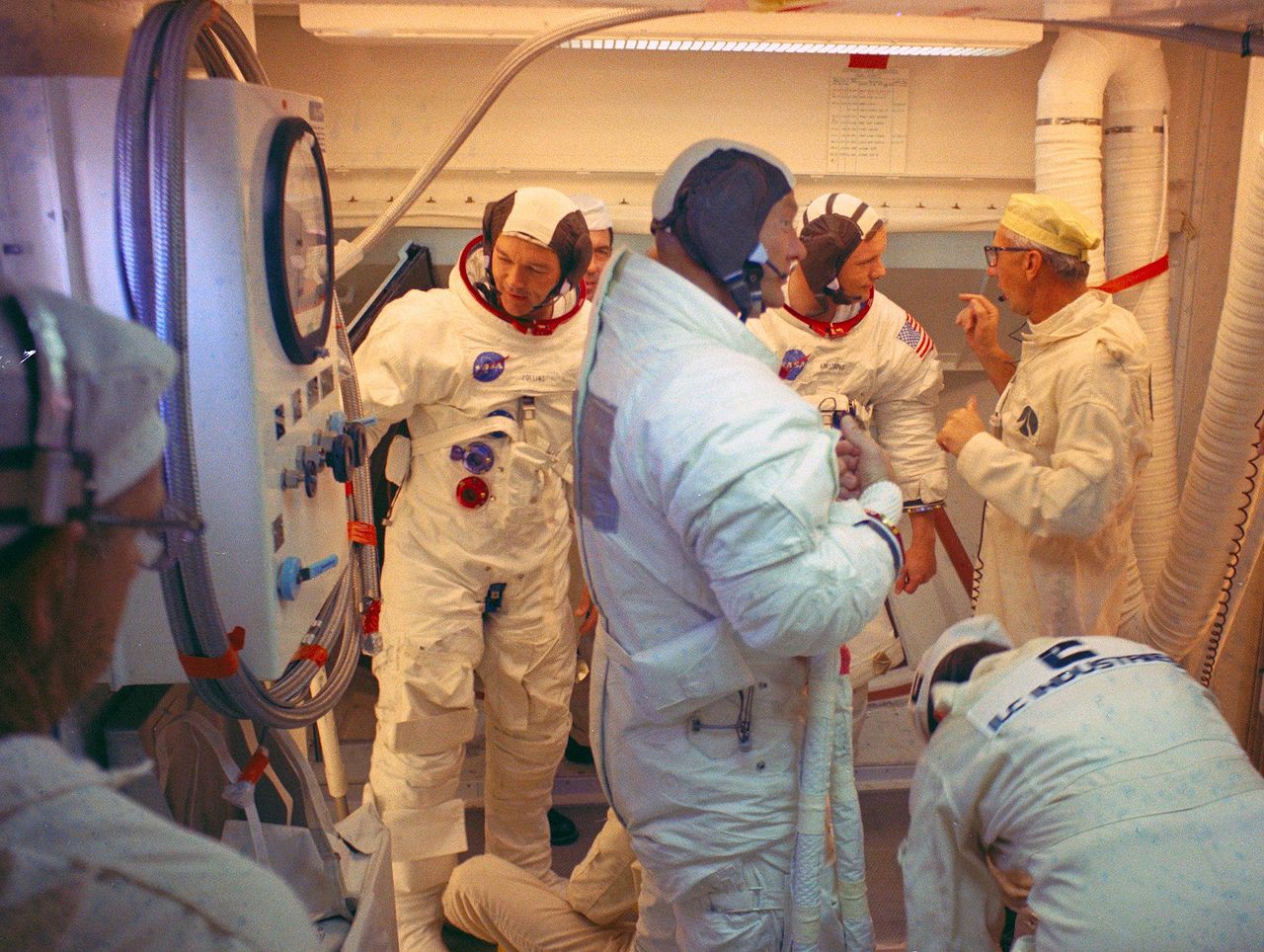
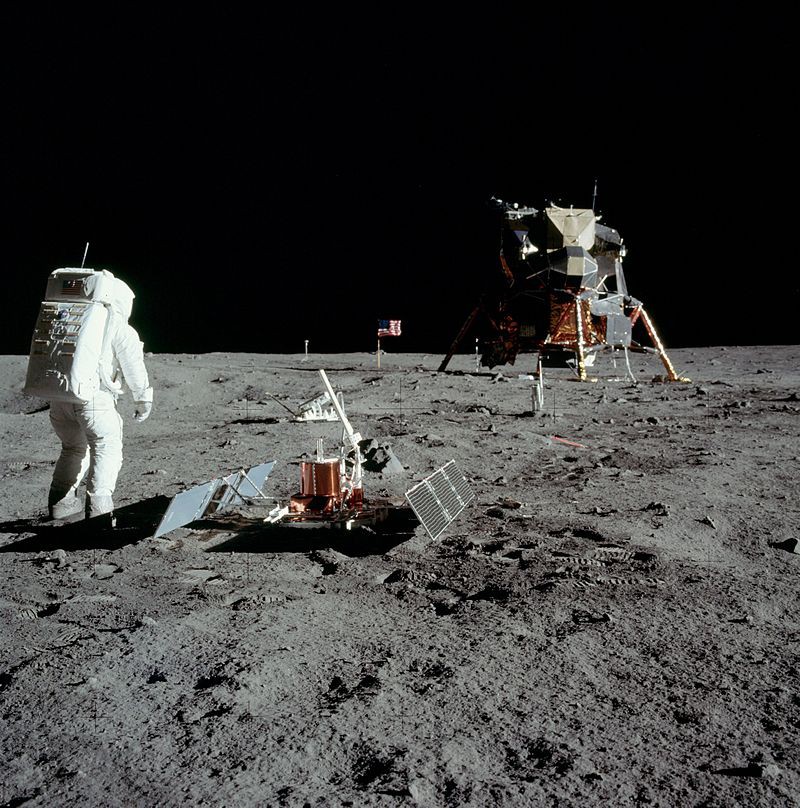
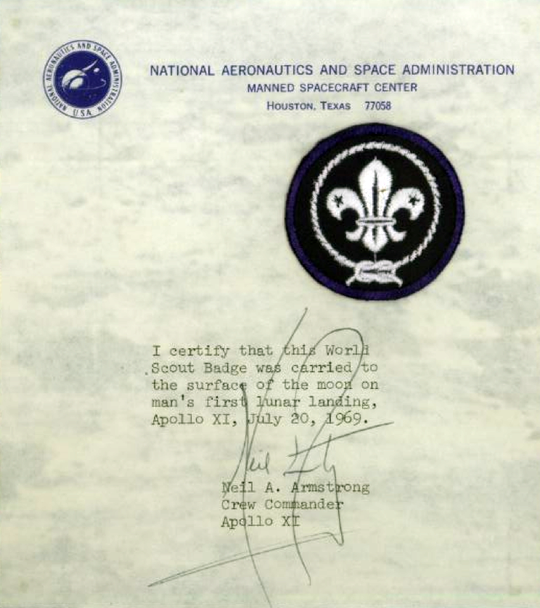
Apollo 11 launched from Kennedy Space Center in Florida at 9:32 a.m. EDT on July 16, 1969. 

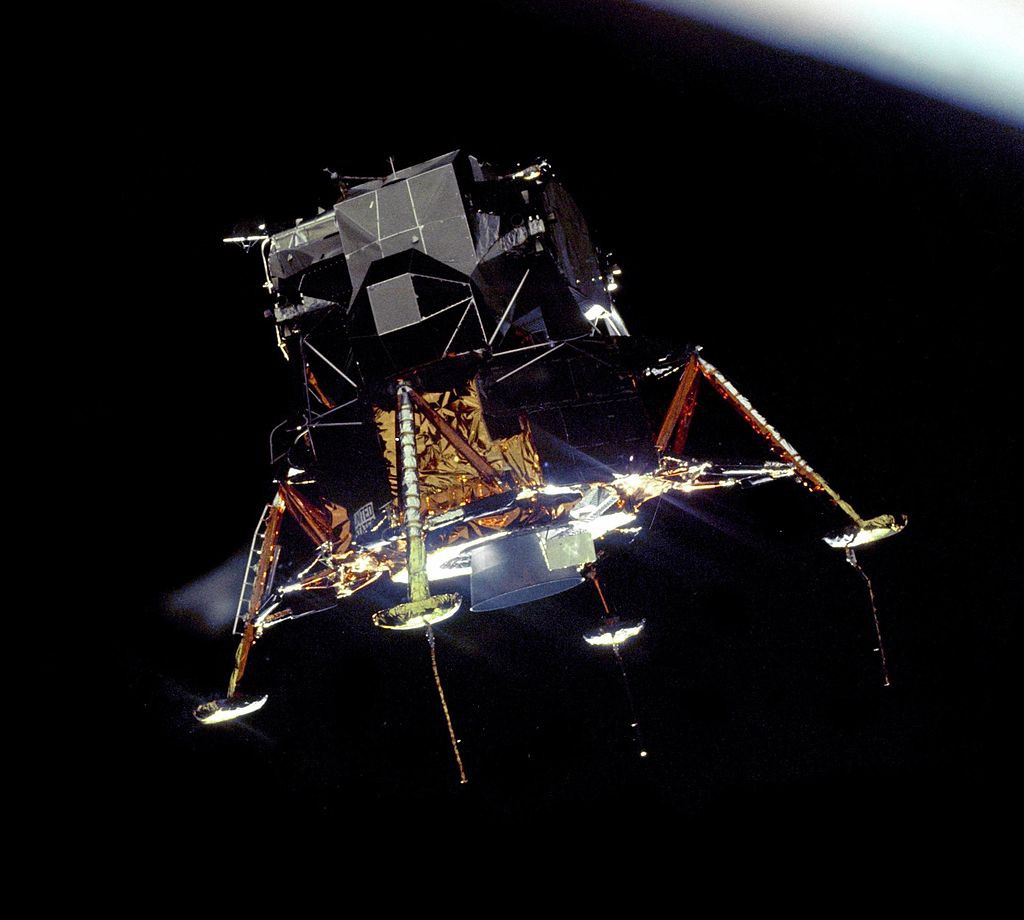
The Apollo spacecraft had three parts: a Command Module (CM) with a cabin for the three astronauts, and the only part that landed back on Earth; a Service Module (SM), which supported the Command Module with propulsion, electrical power, oxygen, and water; and a Lunar Module (LM) for landing on the Moon. 

   In addition to throngs of people crowding highways and beaches near the launch site, millions watched the event on television.Smile

While in flight, the crew made two televised broadcasts from the interior of the ship, and a third transmission as they drew closer to the moon,  revealing the lunar surface and the intended approach path.

On July 20, Armstrong and Aldrin entered the lunar module, nicknamed the "Eagle" and separated from the Command Service Module — the "Columbia" — headed toward the lunar surface.  

Avatar of Bellerophontis

The lunar module touched down on the moon's Sea of Tranquility, a large basaltic region, at 4:17 p.m. EDT. Armstrong notified Houston with the historic words, "Houston, this is Tranquility Base. The Eagle has landed."

For the first two hours, Armstrong and Aldrin checked all of the systems, configured the lunar module for the stay on the moon, and ate. They decided to skip the scheduled four-hour rest to explore the surface.

A camera in the Eagle provided live coverage as Armstrong descended down a ladder at 11:56 p.m. on July 20, 1969, and uttered the words, "That's one small step for man, one giant leap for mankind."

Aldrin followed twenty minutes later, with Armstrong recording his descent. Armstrong had the responsibility to document the landing, so most of the images taken from the Apollo 11 mission were of Aldrin.

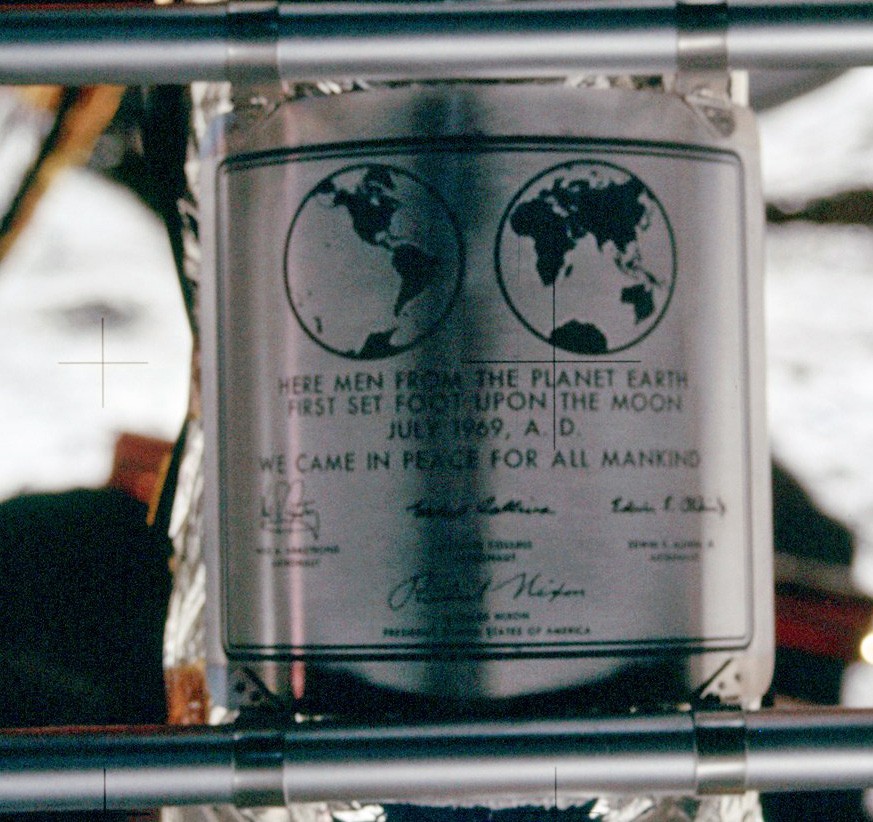
While on the surface, the astronauts set up several experiments, collected samples of lunar soil and rock to bring home, erected a United States flag, took core samples from the crust and placed a plaque that stated:

HERE MEN FROM THE PLANET EARTH
FIRST SET FOOT UPON THE MOON
JULY 1969, A.D.
WE CAME IN PEACE FOR ALL MANKIND

Memorial medallions with the names of the three astronauts who perished in the Apollo 1 fire and two cosmonauts who were also deceased, including the first man in space, Yuri Gagarin, remained after the astronauts left, as did a one-and-a-half-inch silicon disk with goodwill messages from 73 countries, and as the names of congressional and NASA leaders.

Armstrong spent a little over two and a half hours outside of the Eagle.

At 1:54 p.m. EDT, having spent a total of 21 and a half hours on the moon, the lunar module blasted back to where Collins sat in the Columbia. The two vehicles docked, and the crew and samples transferred to the Command Service Module before the Eagle was jettisoned into space. The astronauts headed back home.

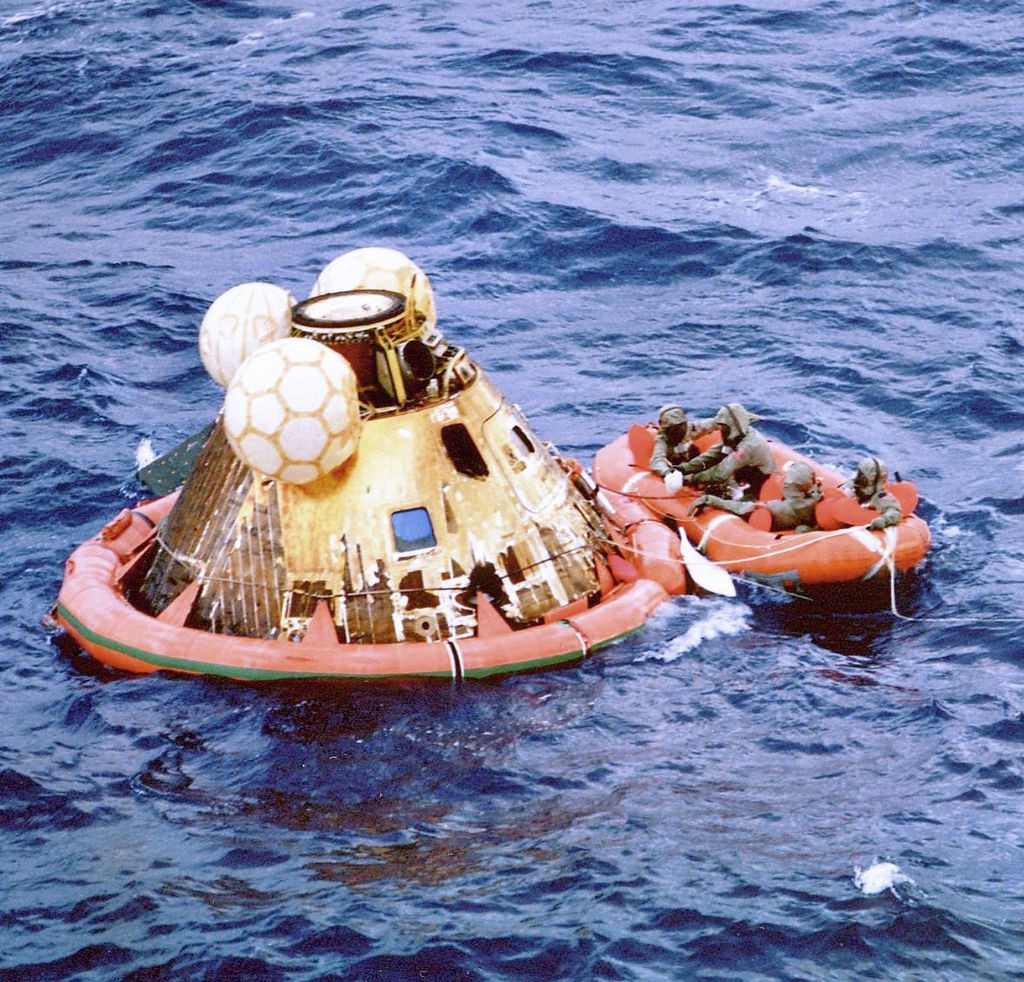
The team splashed down in the Pacific Ocean at 12:50 p.m. EDT on July 24, only a few miles from the recovery ship, the U.S.S. Hornet.

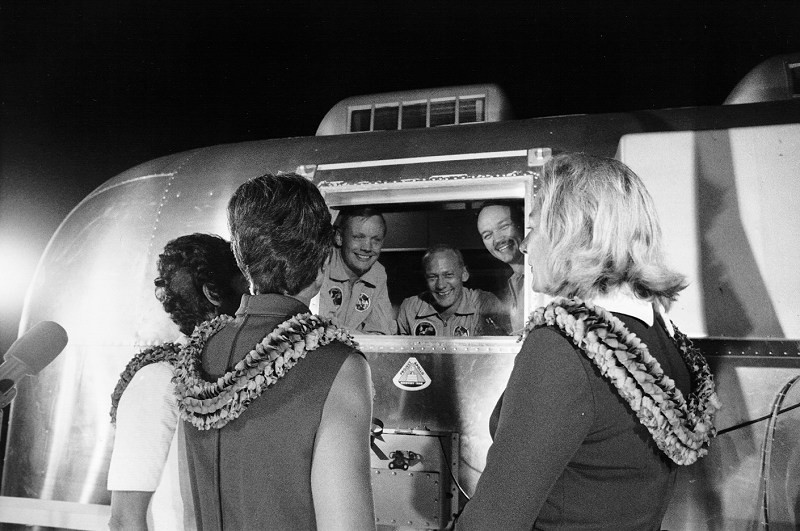
After donning biological isolation garments, the crew left the Columbia and climbed into a rubber boat, where they were rubbed down with iodine in an effort to stem potential contamination. They traveled by helicopter to a Mobile Quarantine Facility aboard the ship before being taken to Houston.

They remained quarantine until Aug. 10, having completed the national goal set by President John F. Kennedy in 1961, to perform a crewed lunar landing and return to Earth.

Avatar of Bellerophontis

17 July          It's Happy and is YellowCool

Sunny  World Emoji Day today, created by Jeremy Burge, founder of Emojipedia 

because it famously features on the 'Calendar' emoji in iOS operating systems. This Sunday Twitter is encouraging people to celebrate by Tweeting their favourite emoji,Wink

http://www.dailymail.co.uk/sciencetech/article-3691923/What-emojis-say-country-Britain-favour-weary-faces-France-loves-heart-Germans-prefer-thumbs-up.html


In 17 July 1968 the world première of The Beatles' animated feature film, Yellow Submarine, took place on this evening at the London Pavilion on Piccadilly Circus.Laughing

After the première The Beatles went to a celebratory party at the Royal Lancaster Hotel, where the in-house discothèque was renamed Yellow Submarine for the occasion. It retained the name for several years after.

Avatar of Bellerophontis

18 July             Day of InfallibilityCool

The solemn declaration of papal infallibility by Vatican took place on 18 July 1870Innocent

Papal infallibility is a dogma of the Catholic Church that states that the Pope is preserved from the possibility of error "when, in the exercise of his office as shepherd and teacher of all Christians, in virtue of his supreme apostolic authority, he defines a doctrine concerning faith or morals to be held by the whole Church." 

The use of this power is referred to as speaking ex cathedra. (This is from the ancient greek word "εξ καθεδρας" )

But more than 100 years later, on another 18 July  Nadia Elena Komaneci, tuned in the spirit of the Day, practically she attained the blessing of the infallability tooSurprised and became the first gymnast to be awarded a perfect score of 10 in an Olympic gymnastics event Cool

At the age of 14, Comăneci became one of the stars of the 1976 Summer Olympics in Montreal. During the team compulsory portion of the competition on July 18, her routine on the uneven bars was awarded a perfect ten.  It was the first time in modern Olympic gymnastics history that the score had ever been awarded.Surprised  Over the course of the Olympics, Comăneci would earn six additional tens, en route to capturing the all-around, beam, and bars titlesWink


Avatar of Bellerophontis

18 July     World Day of Nelson Mandela "As we let our own light shine, we unconciously give other people permission to do the same"N.MandelaWink

On this day of Infallibility Nelson Mandela was born in 1918 blessed with an inner lightInnocent

"I have cherished the ideal of a democratic and free society in which all persons will live together in harmony and with equal opportunities. It is an ideal which I hope to live for and to see realised. But if it needs be, it is an ideal for which I am prepared to die."Rivonia Trial Speech, 1964Cry

Nelson Mandela,  had been imprisoned for his beliefs 27 years in order to prevent his light not to be seen by the people Frown

 “A winner is a dreamer who never gives up” Wink  

 Great peacemakers are all people of integrity, of honesty, but humility. There is a universal respect and even admiration for those who are humble and simple by nature, and who have absolute confidence in all human beings irrespective of their social status.” ― Nelson MandelaConversations With MyselfSmile

“For to be free is not merely to cast off one's chains, but to live in a way that respects and enhances the freedom of others. Freedom is indivisible; the chains on any one of my people were the chains on all of them, the chains on all of my people were the chains on me.” Nelson Mandela

 British Pop song "Free Nelson Mandela" composed by Jerry Dammers helped a lot ! Mandela never forgot the debt he owed to supporters in the United Kingdom. In 1996 he used a speech to both Houses of Parliament in London to give his thanks: "We take this opportunity once more to pay tribute to the millions of Britons who, through the years, stood up to say: No to apartheid!" In 2008, singer Amy Winehouse joined Dammers for the finale to a concert in London's Hyde Park marking Mandela's 90th birthday. The song's message had long since been realized -- and indeed the by-then-frail elder statesman appeared onstage -- but it was received as warmly as ever.Smile

“A good head and good heart are always a formidable combination. But when you add to that a literate tongue or pen, then you have something very special.” 
― Nelson Mandela

Avatar of Bellerophontis
19 July    The Boss rocked East Berlin in July 1988 in front a river of three hundrent thousand young, enthusiastic people Smile  
and the Berlin Wall  cracked and fell  the following yearSurprisedCool
“Bruce Springsteen played an amazing concert – four hours long. It went straight to their hearts.” But what added the political impetus was that in the middle of it, Springsteen  spoke in German “I am not for or against a government.  I’ve come to play rock and roll for you, in the hope that one day all barriers will be torn down.” He was greeted with a roar of approvalLaughing

 "It was a nail in the coffin for EastGermany," said Jörg Beneke, who was there that day. They had never heard a message like that.  Here was this big, famous American rock star who came into the middle of East Germany, into East Berlin, and told them he hoped that the wall would come down one day"Wink

Even now, many who were there that night talk about it as a life-changing moment. "There was this underlying sentiment in the crowd that night that people didn't want to live behind a wall anymore" ...the Boss has ignited the spark to start the fire into their hearts as they were dancing together in the darkCool


  "It was gradually dawning on everyone between about 20 and 30 years old that things couldn't just continue in East Germany the way they had been going. Something had to change. And when Springsteen came, his concert fitted right into all that."Andrea Dubois, then a 27-year-old scientist said "I was blown away by his presence and the way he was not just playing fantastic music but performing and interacting with the audience and he did do that at this concert. Even where you have hundreds of thousands of people, he manages to relate to people as though he's speaking to each of us SmileCool


Years later, Springsteen reflected on the concert himself. "Once in a while you play a place, you play a show that ends up staying inside of you, living with you for the rest of your life," he said. "East Berlin in 1988 was certainly one of them."Smile

Avatar of Bellerophontis

20 July  

the Battle at Thermopylae

http://www.michaelfassbender.org/spcustoms.html

In the 5th century bc, the Persian empire fought the city-states of Greece in one of the most profoundly symbolic struggles in history. Their wars would determine the viability of a new direction in Western culture, for even as Greece stood poised to embark on an unprecedented voyage of the mind, Persia threatened to prevent the Hellenes from ever achieving their destiny. Persia represented the old ways — a world of magi and god-kings, where priests stood guard over knowledge and emperors treated even their highest subjects as slaves. The Greeks had cast off their own god-kings and were just beginning to test a limited concept of political freedom, to innovate in art, literature and religion, to develop new ways of thinking, unfettered by priestly tradition. And yet, despite those fundamental differences, the most memorable battle between Greeks and Persians would hinge on less ideological and more universal factors: the personality of a king and the training and courage of an extraordinary band of warriors. 

To the Greek strategists in 481 bc, Thermopylae represented their best chance to stop or at least delay the Persian army long enough to allow their combined fleets to draw the Persian navy into a decisive sea battle. A narrow mountain pass, Thermopylae was a bottleneck through which the Persian army somehow had to proceed. Forced to fight there, the Persians would be unable to take advantage of their massive preponderance in numbers; instead, they would have to face the Greeks in close-quarter, hand-to-hand combat.

phpUMy3vX.jpeg

Two armies now prepared to converge on the tiny mountain pass. For Xerxes no force, not even nature, would be allowed to resist his progress. When a violent storm tore up the first bridge his engineers had built across the Hellespont, the great king ordered his engineers put to death, and he had his men whip and curse the waters for defying him. New engineers then bridged the Hellespont again. Constructed from nearly 700 galleys and triremes lashed together, the bridge was a marvel of makeshift military engineering. Flax and papyrus cables held the boats in line, and sides were constructed to keep animals from seeing the water and panicking during their crossing. The Persian army advanced inexorably into Greece.

The Greek force that now raced to Thermopylae was ridiculously small for the challenge that awaited it: 300 Spartans, 80 Myceneans, 500 Tegeans, 700 Thespians and so forth, totaling about 4,900. The countrymen they left behind seem to have put little faith in this army. The Athenians voted to evacuate their city. Their men of military age embarked on ships, while women and children were sent to the safer territory of the Peloponnesus. Only treasurers and priestesses remained behind, charged with guarding the property of the gods on the Acropolis.

If any Greek understood the danger of his assignment, it was almost certainly the Spartan commander, Leonidas. Although each city's contingent had its own leader, Leonidas had been placed in overall command of the Greek army. One of two Spartan kings — Sparta had no kingship in any real sense — Leonidas traced his ancestry back to the demigod Heracles. He had handpicked the 300 warriors under his command; all were middle-aged men with children to leave behind as heirs. He had selected men to die, and done so apparently without the philosophic reluctance of Xerxes. Leonidas and the Spartans had been trained to do their duty, and, having received an oracle that Sparta must either lose a king or see the city destroyed, Leonidas was convinced that his final duty was death.

On the way to Thermopylae, Leonidas sent his widely admired Spartans ahead of the other troops to inspire them with confidence. They arrived to find the pass unoccupied. It was only 50 feet wide and far narrower at some points. There were hot springs there — these gave the pass its name — an altar to Heracles and the remains of an old wall with gates that had fallen into ruin. The Greeks now rushed to rebuild it.

As Xerxes' army drew closer, a Persian scout rode to survey the Greek camp. What he saw astonished him — the Spartans, many of them naked and exercising, the rest calmly combing their hair. It was common practice for the Spartans to fix their hair when they were about to risk their lives, but neither the scout nor his king could comprehend such apparent vanity.

The Greeks, too, began to receive intelligence on the size of the Persian force. Sometime before the battle, the Spartan Dieneces was told that when the Persian archers let loose a volley, their arrows would hide the sun. To Dieneces that was just as well. For if the Persians hide the sun, he said, we shall fight in the shade.Despite the imperturbable courage of Dieneces and the other Spartans, the Greeks were shaken when the Persian host finally neared their position. At a council of war the leaders debated retreat, until Leonidas' opinion prevailed. The Spartan would do his duty. The Greeks would stay put and try to hold off the Persians until reinforcements could arrive.

The Persian army encamped on the flat grounds of the town of Trachis, only a short distance from Thermopylae. There, Xerxes stopped his troops for four days, waiting upon the inevitable flight of the overawed Greeks. By the fifth day, August 17, 480 bc, the great king could no longer control his temper. The impudent Greeks were, like the storm at the Hellespont, defying his will. He now sent forward his first wave of troops — Medes and Cissians — with orders to take the Greeks alive.

The Medes and Cissians were repulsed with heavy casualties. Determined to punish the resisters, Xerxes sent in his Immortals. The crack Persian troops advanced confidently, envisioning an easy victory, but they had no more success than the Medes.

What Xerxes had not anticipated was that the Greeks held the tactical advantage at Thermopylae. The tight battlefield nullified the Persians' numerical preponderance, and it also prevented them from fighting the way they had been trained. Persian boys, it was said, were taught only three things: to ride, to tell the truth and to use the bow. There was no place for cavalry at Thermopylae and, even more critical, no place to volley arrows. The Greeks had positioned themselves behind the rebuilt wall. They would have to be rooted out the hard way.

The Persian army was neither trained nor equipped for such close fighting. Its preferred tactic was to volley arrows from a distance, the archers firing from behind the protection of wicker shields planted in the ground. They wore very little armor and carried only daggers and short spears for hand-to-hand combat.

Although students of military history argue that true shock warfare has seldom been practiced — since it is antithetical to the soldier's natural desire for self-preservation — the Greeks had made it their standard tactic. Greek soldiers perhaps drew some confidence from their heavy armor and their long spears, which could outreach the Persian swords. But the Greeks also had another, more intangible, edge: something to fight for. They were defending their homes, and they were doing their duty — they were not fighting as slaves of some half mad god-king. As heavy casualties sapped their soldiers' resolve, the Persian commanders had to resort to lashing them with whips in order to drive them against the determined Greek defenders.

During that long first day of fighting, the Spartans led the Greek resistance. Experienced Spartan warriors would come out from behind the walls, do fierce battle with the Persians, then feign retreat in order to draw the Persians into a trap. Xerxes reportedly leapt to his feet three times in fear for his army.

The second day of Thermopylae followed much the same course as the first. The various Greek contingents now took turns fending off the attacks, but the Persians failed to make any headway.

As a soul is bound to a body, so will a Spartan to his Shield. Woman gave the shield to the worrier asking for "Victory or Death"

It is difficult to say how long the Greeks could have held off the Persians at Thermopylae — their casualties thus far were comparatively light — but the question was soon made moot. When the Greeks had first arrived, they learned that the presumably impregnable site possessed a hidden weakness: There was a track through the mountains that could be used by an enemy force to surround and annihilate the defenders of the gate. Recognizing the danger, Leonidas had dispatched his Phocian contingent to guard the path. Thus the already small number of troops available at the gate was made smaller still by the division of the Greek forces. The Phocians themselves were charged with the difficult task of defending a route with no natural defenses. Their best hope — Greece's best hope — lay in the mountain track remaining unknown to the Persians.

It was, in the end, a Greek who betrayed that secret. The traitor, Ephialtes, was apparently motivated by greed when he revealed the mountain path to Xerxes. Acting immediately on the new information, the king sent Persian troops up the path during the night, when darkness concealed their movement among the oak trees. Near the top, they completely surprised the luckless Phocians. At last free to fight in their usual fashion, the Persians rained down arrows as the Phocians frantically sought to gather their arms. In desperation, the Phocians raced to higher ground for a last stand. The Persians, however, had no interest in chasing the Phocians higher but instead turned down the trail, aiming for the pass at Thermopylae.

Lookouts raced down the hill to warn Leonidas of the descending Persian army. There was little time left. A quick council of war led to the decision to split up the Greek force. There was no reason for the entire army to be annihilated at the wall. Most contingents were now allowed to return home and prepare for a later showdown. Leonidas and his Spartans, however, would remain at Thermopylae. Standing by them were the loyal Thespians, who considered it an honor to die fighting beside the Spartans. 

Although some have questioned the wisdom of Leonidas' decision, wondering if he was overly influenced by a mumbo-jumbo oracle prophesying his sacrificial death, the situation gave him no alternative. If the entire Greek army had fled, it would have eventually been caught from behind and slaughtered by the faster-moving Persian cavalry. Leonidas was giving the retreating troops the only chance they had to escape and fight another day.

On te last day the Greeks elected to inflict as much damage as possible on the Persian army. Knowing that this day's struggle would be their last, they pressed stolidly forward, leaving behind the safety of the wall to fight in the widest part of the pass. There, they would battle the massive Persian army on open ground. 

Xerxes ordered his men in for the kill. Once again his commanders lashed their own troops to drive them forward. Many Persians were trampled to death by their own comrades. Others, shoved aside, drowned in the sea. All the while, the Spartans and Thespians did their deadly work. No one, wrote Herodotus, could count the number of the dead.

The Greeks fought with their long spears until the shafts had all broken. Then they fought with swords. In the course of the struggle, Leonidas fulfilled the prophecy that had doomed him. Four times the Greeks then drove the enemy away from his body before the Persians finally succeeded in dragging it away. It was about then that the second Persian force arrived from the mountain pass.

Now completely surrounded, the exhausted Greeks withdrew for the last time behind the wall and formed themselves into a single compact body protected by their shields from the archers. Spartans were considering archers a womanish way of fight and they didn't like it. Here, wrote Herodotus, they resisted to the last, with their swords, if they had them, and, if not, with their hands and teeth, until the Persians, coming on from the front over the ruins of the wall and closing in from behind, finally overwhelmed them.


The Battle of Thermopylae was over. Leonidas and his 300 Spartans all lay dead, as did the 700 Thespians who had stood by them. The Persian dead were said to number around 20,000, although Xerxes tried to conceal this horrendous loss by having most of them secretly buried, leaving only about 1,000 Persian bodies for his army to see as it marched through the pass.

It was customary in Sparta to make great ceremony over the death of a king. Riders would carry the news throughout the country, and women would go around the capital, beating cauldrons. But Leonidas was denied even a proper burial. Xerxes ordered his head cut off and fixed on a stake. The rest of the Greek dead he ordered buried in order to conceal how few had held up his army for so long, and to remind his veterans of Thermopylae that the Spartans were mortal after all.

The Greeks' courageous stand at the mountain pass had hardly even slowed Xerxes' advance. Four days of waiting and three days of fighting — Leonidas' heroism had bought only one more week for his compatriots. Athens, all but abandoned, was soon sacked.

And yet Thermopylae was not a total failure. The invading army had been bloodied — badly, if Herodotus is to be believed — and it must have had some effect on Persian morale. The battle's influence on the Greeks was indisputable. When the war was over — for Greece did finally defeat the Persians — they established holidays commemorating Thermopylae and erected memorials over the battlefield. Four thousand men from Pelops' land/against three million once did stand read one. Another celebrated Leonidas and his 300 men: Go tell the Spartans, stranger passing by/that here, obeying their commands, we lie.

Thermopylae thus acquired a significance that transcended its tangible military impact. In the end, the battle's value lay not in land gained or lost or in men killed or captured, but in inspiration. The Spartans and Thespians had taught Greece and the world an enduring lesson about courage in the face of impossible odds.

This article was written by David Frye and originally published in the January/February 2006 in military history magazine.

http://www.livius.org/he-hg/herodotus/logos7_22.html