Upgrade to Chess.com Premium!

K + P vs K endgames

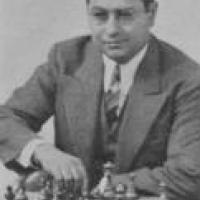
Irving Chernev (January 29, 1900 – September 29, 1981) was a prolific Russian-American chess author. He was born in Pryluky in the Russian Empire(now in Ukraine) and emigrated to the United States in 1920. Chernev was a national master strength player, and was obsessed with chess. He wrote that he "probably read more about chess, and played more games than any man in history." Chernev's deep love for the game is obvious to any reader of his books. He wrote 20 chess books, among them: Chessboard Magic!The Bright Side of ChessThe Fireside Book of Chess (with Fred Reinfeld); The Most Instructive Games of Chess Ever Played1000 Best Short Games of ChessPractical Chess EndingsCombinations: The Heart of Chess; andCapablanca's Best Chess Endings. In 1945, he and Kenneth Harkness wrote An Invitation to Chess, which became one of the most successful chess books ever written, with sales reaching six figures. Perhaps his most famous book is Logical Chess: Move by Move, first released in 1957. This takes 33 classic games from 1889 to 1952, played by masters such as CapablancaAlekhine; and Tarrasch, and explains them in an instructive manner. Analgebraic notation version was published by Batsford in 1998, with minor alterations to the original text. Chernev died in San Francisco in 1981. SOURCE: http://en.wikipedia.org/wiki/Irving_Chernev

All of the compositions by Chernev are from his book "Practical Chess Endings" - see my review of it in my blog on endgames books.

These compositions are not in the exact order they should be, but anyone not able to solve all of them on the first try will learn a lot by playing through all of them even "out of order."  

You can (and should) check out alternate lines of play by clicking the "solution" and then the "move list" buttons, even if you solved the problem yourself.

An apparently unsolvable chess problem here consists of trying to move the diagrams around (to put them in a certain order) everytime you add one to the blog, as the "place-holder" graphic doesn't represent the exact position or size of the diagram.


Comments


  • 3 months ago

    SimaSun

    Thanks Roy, it was just the puzzle said incorrect and it confused me because I couldn't see what I did wrong :)

  • 3 months ago

    NimzoRoy

    Problem 6 I don't get. Doesn't 8 Kg4 win? YES I can just play g3 next move and claim the opposition and what about 10. g3 ? YES Doesn't that win too? I really didn't like how white left the pawn all the way back on the second rank. SimaSun

    Gee thats too bad, get over it and remember what my namesake said 

    The beauty of a chess move lies not in its appearance but in the thought behind it NIMZOVITCH
    Is 11 Kg6 forced?? NO, but Chernev is obviously demonstrating a principle here by applying it systematically and not randomly or sporadically I think 11 g3 was simpler, but maybe fritz has some fancy draw.

    Forget about Fritz, carbon-based chess players have worked out these endings above to an exact science long before PCs could play chess. 

    A good exercise is to answer your own questions (when you can) by working them out you'll be learning on your own. It's not that I mind answering them (I don't) but it's always better to draw your own conclusions when you can. You've noticed that there is more than one winning procedure here which shows you're "getting with the program." In general Chernev demonstrates the fastest win, or the most "thematic" method that can always be relied on (and is often the fastest as well)

  • 3 months ago

    SimaSun

    Solved 1,2, 4,7,8,9 in the first try.
    Forgot about the rule of the square in problem 3, for some reason I imagined the diagonal and saw he couldn't cross it, didn't look on the square, stupid mistake! Got it right the second time though.

    Problem 5 I got wrong 1 time, because after 6... Kf8 I played 7. Kd7. Of course i need to push the pawn there.

    Problem 6 I don't get. Doesn't 8 Kg4 win? I can just play g3 next move and claim the opposition and what about 10. g3 ? Doesn't that win too? I really didn't like how white left the pawn all the way back on the second rank.
    Is 11 Kg6 forced?? I think 11 g3 was simpler, but maybe fritz has some fancy draw.

  • 3 months ago

    GM_2012

    thanks, good, but very easy!

  • 8 months ago

    guru200773

    Very good problems!!! Thank u so much 

  • 8 months ago

    msjenned

    Nice work on example given.

  • 9 months ago

    EricFleet

    In #5, e3 is an acceptable first move. The tempo move gives you the opposition and transitions to the line you give, so it is is simply a matter of preference.


    In #6, g4 is an acceptable move on move #12 (main line).

    Just got done taking my kids through this quiz. My oldest (age 9) did pretty well on most of them... needs more repetitions before it becomes more automatic, but he's getting there :) Thanks for making these available for our review.

  • 9 months ago

    NimzoRoy

    @EricFleet I'm glad to see folks are still reading this blog. In #5, e3 is played on the 2nd move, and in #6 there is more than 1 move 12, ie, move 12 in the "main line" and move 12 in at least one variation. Pls get back to me with clarifications here (unless you've already answered your own questions) and I'll try to get back to you ASAP.

  • 9 months ago

    EricFleet

    And thank you very much for putting this together. I'm teaching my kids about K&P vs K, and these drills will be wonderful for them!

  • 9 months ago

    EricFleet

    On #6, move 12, you can advance the pawn yet it is listed as incorrect.Frankly after the 10th move or so, you've demonstrated that you know how to win. After this, it is a matter of how you want to win.

  • 9 months ago

    EricFleet

    Why is e3 incorrect on #5? It is a perfectly good move using a tempo to get the opposition.

  • 10 months ago

    bwinner1

    thx very very much. Very good puzzles.

  • 11 months ago

    stephen_33

    Don't worry, I wasn't being serious about T.T. - in fact I'm using it more than ever in trying to speed-up my thinking in games.  Sorry to say there are large gaps in my knowledge of the game's history & it's players, so both Grigoriev & Chernev were unknown to me (but not anymore).

    Because King & Pawn vs King crops up so often in endgame situations, I've spent some time studying it but I still get caught out trying to promote on the b & g files - make a wrong move & you soon have stalemate with black's king trapped on the corner square !

    It's much easier to find solutions on files c to f as you show in the diagrams.  As for files a & h, once black takes possession of (say) g8/h8, then it's impossible to promote (unless you know of some method ?). 

  • 11 months ago

    NimzoRoy

    Thanks stephen_33 for the compliment but I'd still recommend Tactics Trainer as well. Grigoriev is who Chernev attributes #6 to, did you think this was a typo because all the other ones are by Chernev? Grigoriev is a well-known composer BTW.

    You're not the first reader to mention that "and wins" isn't always obvious to everyone, so I'll try going back and "fixing" any puzzles readers have stated were not easy wins for them to complete. I have added a more complete solution to #6, although in  it's better when readers can figure out the "and wins" on their own although it can be more time-consuming!

  • 11 months ago

    stephen_33

    Forget Tactics Trainer, these endgame problems/studies are of much more practical use - everone should study them.  Thanks NimzoRoy for posting them.

    Only had a problem with #6 (the one attributed to 'Grigoriev' - is that a typo error ?) because the continuation may not be obvious to everyone & you can go wrong (I did on a first attempt).

  • 12 months ago

    vinoth19

    Thanks

  • 12 months ago

    shengyi

    Very easy puzzles.

  • 17 months ago

    NimzoRoy

    Sadler I will try and remember to explain in each blog that clicking on "solution" and "move list" will show alternate winning and/or losing lines. As for specific errors or omissions I'm counting on readers to point them out (unless I see them myself) after all I can't be expected to do everything! :)

  • 17 months ago

    Sadler

    Very nice! It would be very helpfull for the intended audience if you point out every instance when your solution is not the only winning move. To play a winning move and be told it is not correct is very frustrating for a newbe. Tip them to see the solution with the move list.
  • 17 months ago

    adi007bond

    i'm 1451 rated plaer and know this pawn endgame ok

Back to Top

Post your reply: