Upgrade to Chess.com Premium!

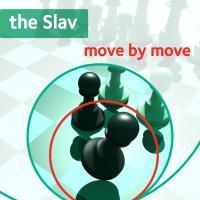
Paddy Patzer's Pile of Books: The Slav: Move by Move

Chess books on openings have been around for a while but they all look more or less the same. Very little thought have been invested in improving the layout or the usefulness of the opening books. There are a few gems out there but they tend to be opening books of a more general nature.


The development of endgame books took a gigantic leap some years ago when Silman's excellent "Silman's Complete Endgame Course: From Beginner To Master" was released. Silman's daring approach to present the material by "need-to-know basis" by rating class was indeed a success. Finally a book on "The putting of Chess", as Purdy phrased it, that would guide the improving chess player to better results.


So, Will the Move by Move Series by Everymanchess have the same impact on Opening studies as Silman's book had on studies of endgames? Not quite, but I think the series has potential to stay head and neck well above the rest of the books in the genre. The perfect opening book in my world would be a blend of Everymann's "Move-by-move approach" and the structure often used by Chess Stars Publishing which is a little along the lines of Silman's "by rating approach". The Chess Stars Publishing books start off with a few pages on each topic called "Quick Repertoire" which is more or less to get started (and for many improving players all you need!) and the add two more layers of knowledge called "Step by Step" and "Complete Games".


How about this specific book: "The Slav: Move by Move" by Cyrus Lakdawala? In short, a good book! I like the Questions and stuff to make you read actively. I like somewhat chatty and easy going prose in the book. It might be a good thing to read a few sample pages before you decide to buy the book. The slightly unorthodox tone in the book is most likely not for everyman.

Comments


  • 16 months ago

    farbror

    Excellent input, naughtybishop!

  • 16 months ago

    naughtybishop

    I've gone through some of this book, and I like it a lot, except for the chapter on the Exchange Variation.

    Good points:

    • Lots of very high quality, fully annotated, complete games by top GMs, such as Kramnik, Morozevich, Topalov, etc.
    • Q&A dialog format with cute, pithy commentary.
    • Large, clear print and diagrams.

    I have a big problem with the author's recommendation against the Exchange Variation.  He recommends a very sketchy line, and provides no alternative:  1.d4 d5 2.c4 c6 3.cxd5 cxd5 4.Nc3 Nf6 5.Nf3 Nc6 6.Bf4 Qb6, intending to grab the b2 pawn before castling.  Maybe this approach is tactically OK, but it requires significant memorization, and what if it gets refuted?  There are a couple of other interesting lines for Black in the Exchange that are unfairly excluded in a book as long as this one:

    • 1.d4 d5 2.c4 c6 3.cxd5 cxd5 4.Nc3 e5!? is a very interesting try for Black that can lead to tactical positions that are more positionally sound than the book line.
    • 1.d4 d5 2.c4 c6 3.cxd5 cxd5 4.Nc3 Nf6 5.Nf3 Nc6 6.Bf4 Ne4!? 7.e3 Nxc3 8.bxc3 g6 is also very interesting, leading to Gruenfeld-like positions.
    • 1.d4 d5 2.c4 c6 3.cxd5 cxd5 4.Nc3 Nf6 5.Nf3 Nc6 6.Bf4 e6 is even not so bad, just a bit dull maybe.

    Overall, this is a very good book that is worth getting if you are at all interested in the Slav.  The chapters on the main lines are full of great examples, annotated out to the bitter end.  I like that, but some won't.  IMO, skip the chapter on the Exchange Variation, except maybe for a blitz weapon.

  • 19 months ago

    farbror

    Yes, Eric!! The are stabbing for our hearts....erhh wallets!

    Cool

  • 19 months ago

    ericmittens

    I loved this book, both for the general format and Lakdawalas witty writing style. I've ordered the nimzo indian move by move (by john emms) as well as the ruy lopez (by neil mcdonald). I hear there are books for the taimanov sicilian, 1...d6, the torre attack, and the caro kann in the pipeline.

  • 19 months ago

    naughtybishop

    @farbror - OK.

    I like to use CPT - Chess Position Trainer (v3.3) for openings.  (www.chesspositiontrainer.com).  If you enter your opening lines manually, it will drill you on them until you can play them in your sleep.  You can also use this software as a middlegame and endgame trainer, but it really works best for openings since it forces you to put everything in sub-repertoires for White and Black.  The way I use it for endgames is to always make White the side that is trying to press a win or save a draw.  I learned K+B+N vs K quite well this way.

  • 19 months ago

    farbror

    naughtybishop, I am looking forward to hear what you think about the book!


    dzindzinfan, Yes! There are some interesting work ongoing for smart phones and other tools. Reading from a book has its charm but ebooks et al is much better for active learning.

  • 19 months ago

    naughtybishop

    Here are some interesting reviews on Amazon.

    Goosemeyer was positive but critical: "This is a 400+ plus page monster ... I'm surprised he didn't throw in a Bishop + Knight mate for good measure. ... Give us narrative, give us exposition, give us analysis, even give us repetition, but for goodness sake spare us a liberal education. There is value in these pages, but it is an unnecessarily exhausting job to mine it."

    Hodges brushed off this line of critcism: "What you do get is complete games, fully annotated, along with Cyrus' repetoire recommendations. (Hey, kids! Middlegame and endgame instruction from a GM-strength IM for free!)"

    I just ordered the book, since I want to learn more about the Slav, and I don't really mind a long-winded, chatty approach.

  • 19 months ago

    dzindzifan

    This is a great topic. I've been playing seriously since high school in the 1970's ... also played a lot of tennis over those years ... so I'm starting to believe that the chess book has gone the way of the wooden racquet. Technology has eclipsed it more or less ... after getting a hold of chess videos in the late 1990's and now with chess.com, I'm thinking that the e-book (electronic book) format (like this website) where you can move the pieces in various diagrams is the way to go or watch a particular lesson or examples from games.  It saves so much time, and is so much more effective rather than setting up positions.  So let's see someone put IM Watson's Chess Strategy book in e-book format or Nimzowitch's My System in e-book format or Reassess Your Chess ...  example IM Danny Rensch on the pawn structures series ... this is an amazing cutting edge series of videos on this website. 

  • 19 months ago

    Lawdoginator

    Thanks for the link. 

  • 19 months ago

    farbror

    Have a look here: http://www.chess-stars.com/

  • 19 months ago

    Lawdoginator

    I'd like to hear more about Chess Stars Publishing. Sounds intriguing. 

Back to Top

Post your reply: