

Chess Strategy

Hello guys in this blog you will be discovering the toughest and unbeatable chess strategy. This is the first step to your success in chess. Wish you good luck !!
Open vs Closed Chess Game

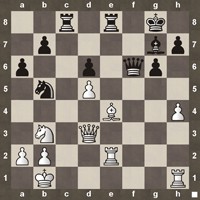
Chess games are usually either open or closed and it’s important to know the difference between the two. Open games are those games where the pawn structure is not locking up the middle and there are lots of wide open spaces for pieces to move. Closed games, like the image to the right, are those games where the pawns have a defined structure and blocking the mobility of different pieces.
Bishops tend to fair better in open games as their strength is using long diagonals. Knights tend to do better in closed games as they can move around to every square where a bishop can easily get blocked in and become useless. Always be mindful in every chess game if it is open or closed and act accordingly.
Good vs Bad Bishops

One of the most misunderstood pieces in chess is the bishop. You sometimes will hear that bishops are better than knights. You sometimes will hear that knights are better than bishops. Some people will never trade their bishops because they think they are really good pieces.
The truth is the chess game itself will tell you whether a bishop is a good bishop or a bad bishop. If a chess game is open then bishops will reign supreme. If the game is closed, then bishops no longer are as valuable. Also if your bishop can only attack your own pawns and none of your opponent’s, then it’s a bad bishop. You would like a bishop in either an open game or in a game where it can attack all of your opponents' pieces instead of being blocked in and can only attack its own pieces.
Chess Decoy
Chess games many times are won and lost because of a single tactical move. One of the most common tactics that you will see in any chess game is the decoy.
The decoy in chess is finding a poisoned square that your opponent would never want to go to and doing everything you can to make them go there. You usually are trying to force either a king or queen to a poison squared, especially if you are giving up substantial material to do such.
It is important to know that just because you move them to a poisoned square does not mean you will have an advantage in material. Many times you want them to move their king to a particular poisoned square so that you can have a more powerful attack.
Chess Windmill

There are some tactics that are more powerful than others. You hardly ever find a chess move more dangerous than the windmill.
The windmill in chess looks to gobble up numerous pieces of your opponents by using a series of discovered attacks that your opponent can respond to by a limited number of ways. Each time a piece is captured the discovered attack is set in motion again.
While you should always be on the lookout for tactics in your chess game, keep a special mental note for the windmill because it will change the course of any game in a hurry.
Pinning the Knight

Most people recognize that you need to develop your minor piece early in the game. It’s also common to develop knights before bishops as people try to control the center without bringing out their powerful bishops too early.
When people do develop their bishops it is very common to try and pin down a knight to either a king or queen (see the picture to the right as an example).
Although this isn’t always bad there are definitely times that you need to be aware of when you should not try to pin down a knight with your bishop.
Attacking the F7 Square

The f7 square is widely considered the weakest point on the board for black. It is the only square that is not defended by any of the minor or major pieces and it is a pivotal square that protects the black king. For this reason, many traps are formed to attack this square and why black should always be looking out for any attacks on the square.
Keep in mind that your middle game strategy might change depending on the opening. If you opponent puts pawns on d5 and e6 then you will not have a clear path at the f7 square with your bishop like you would if those same pawns were on d6 and e5.
You should note that those players that start with e4 will usually get to attack the f7 square much more than those players that start with d4.
Bishop Sacrifice

It is important to know when to sacrifice a bishop on h7 and when it is not.
Most players are always looking for crazy sacrifices that don’t work and end up putting themselves down lots of material and not much else to show for their efforts.
When you want to sacrifice your bishop on h7 there are a few things that you need in place for it to work.
- Need light square bishop on the b1-h7 diagonal
- Need knight on f3
- Need Queen that can jump to h5
- Need bishop along the c1-h6 diagonal (usually seen on c1)
- Need pawn on e5
Make sure that you have these things or this sacrifice is doomed from the beginning.
Chess Deflection

Many times in a chess game you are presented with an opportunity to capture a powerful piece or checkmate your opponent’s king. The only problem is that your opponent is using one of their pieces to defend or block your plan.
Deflection is the tactic that looks to remove that defender from their square at all costs. It doesn’t matter where they go to as long as they leave their post and are no longer defending the square that you are looking to occupy.
Sometimes you can gain a significant material advantage with the deflection but many times you will be giving up lots of your own material to remove any defenders your opponent may have so that you can checkmate your opponent’s king.
