
En Passant Unmasked


There is an uncommon rule in chess called "en passant" [French for "in passing"].
https://www.chess.com/terms/en-passant
It's designed to compensate for the fact that one player has the option of moving a pawn two squares rather than one for the initial move. En Passant gives the other player the chance to capture as if the pawn had only moved one square.
This only occurs on a pawn's first move and only with opposing pawns [no other piece can capture En Passant]. Opposing pawns must be on adjacent files.
Also, it's not mandatory, in general. There could be a specific scenario where capturing e.p. is the only legal move so in that case, it is mandatory but only because of the demands of the position [unless the opponent wants to resign, which technically is not a move].
From White's perspective, it only applies when White's pawn is on the 2nd rank [the starting point] and Black's pawn is in an adjacent file on the 4th rank. [From Black's perspective, his pawn would be on the 7th rank and White's on the 5th.]
Here's one way to train your "en passant" detector: note your pawns that haven't moved yet. Then identify any opponent pawns that are a Knight move away [up/down 2 squares and over one square].
Here is an example:

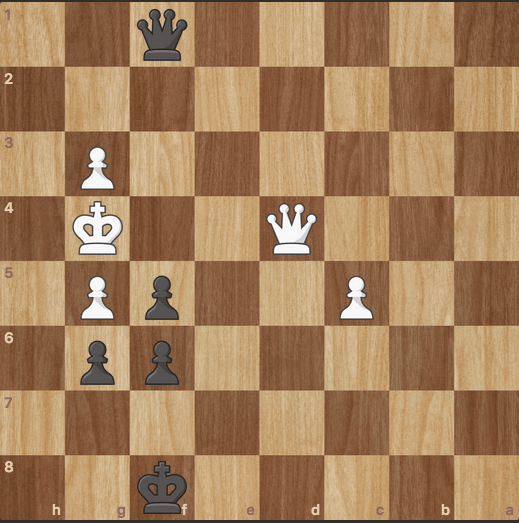
Black's pawn was originally on f7 [its starting square]. White's g pawn is a Knight move away [from f7 to g5].
Black has just played 1. ... f7-f5+. If En Passant didn't exist, White would be forced to play 2. Kh4 which allows ... Qh1#.
However, White has the option [but not compulsion] to capture e.p. like so:

"What new devilry is this?" you might ask. Yes, it's a bit wonky so here's an alternate way of thinking about it: imagine that Black's f pawn splits into 2:

The f5 pawn delivers check and the f6 pawn is attacked by White's g5 pawn. Yes, I know this technically is not possible but it's just a thought experiment so I can do whatever I want. If you don't like it, come up with your own explanation.
The magic comes from the fact that when White captures gxf6, the pawn on f5 disappears:

Hey presto: now you see it, now you don't.
This is fairly rare: I've seen it present itself in only a small % of my games. And note that because it's an obscure rule, your opponent might think you're cheating if you attempt to play it.
I've never seen anyone explain en passant this way. Hopefully it's useful to you.