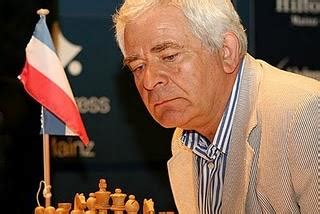
Today is the birthday of Boris Vasilievich Spassky - the World Champion from 1969 to 1972. Spassky was born in Leningrad on 30 January, 1937 and is the senior member of what he has called "the world's smallest trade union" made up of former world chess champions. This is a short article in which I'll look at a few games from early in his career, as he was developing into a formidable attacking player - so I promise there will be no mention of his (justly) famous brilliancy against Larsen from 1970.
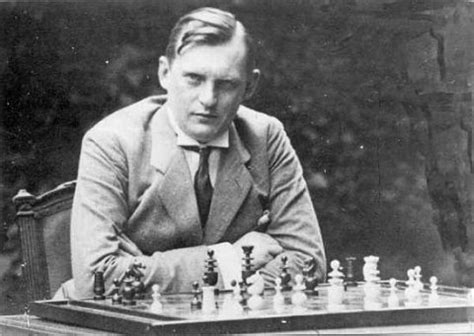
Spassky was always one of my favourite players - he seemed to be the natural successor to the style of Alekhine, with both players being superb attackers, and both having a well-rounded approach to the game. However, describing Alekhine and Spassky as "superb attackers" (although, of course, it's objectively true) is a bit like describing Beethoven or Mozart as being great composers: it sounds utterly redundant and almost ridiculous - probably because they are simply assertions, rather than showing why they are great.
Alexander Alekhine: the first Russian World Champion, and Boris Spassky's chess hero
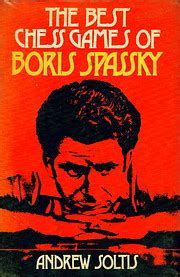
One of the first chess books I ever owned was Andrew Soltis's Best Chess Games of Boris Spassky (Pitman Publishing, 1973). From today's program-inspired analytical perspective the annotations are rather superficial, but the wonderful games still stand out. It was Spassky's crushing wins with the Closed Sicilian (which he once described as "my favourite") against Geller and Larsen in the 1968 Candidates cycle that inspired me to adopt it as a junior. I was also inspired by his attacking play - any chess player would learn a lot about timing and the initiative from his best games.
The first game in the Soltis book is this one, played when Spassky was twelve years old - already, in those prehistoric days before programs and the internet, we see his flair for the initiative. Rudolf Spielmann, a contemporary of Alekhine, once said that he could play Alekhine's attacks as well as Alekhine - but achieving those attacking positions like Alekhine was beyond him. I think this is a key feature of Spassky's attacking play: understanding how to reach such positions is probably one of the most difficult (and under-rated) skills to obtain.
First of all, note the opening: Spassky played the Queen's Gambit. Juniors are supposed to play the open games in order to learn about attacking and tactical play, typically more frequent in games beginning with 1.e4 e5. Spassky later started playing the King's Gambit, winning some very famous games with it (against Fischer, Mar del Plata 1960 and Bronstein, Leningrad 1960 - the finish of the latter, as is well-known, was used in the James Bond film From Russia With Love, released in 1963).
From Russia With Love: the game Kronsteen-McAdams, based on the game Spassky-Bronstein, Leningrad 1960
It leads to a typical IQP position with the thematic break d4-d5 - the fact that Black is two moves away from castling helps White a lot. The young Spassky would've seen that the position after 17.Nd4 is practically winning. It's the difference between seeing the possibility of 12.d4-d5 and how it is resolved that makes an attacking player. I recall struggling to understand all of the possibilities after 12.d4-d5 when I was a junior. It looks simple now, and it's not a sophisticated game, but it does give a glimpse of the kind of player the mature Spassky would become.
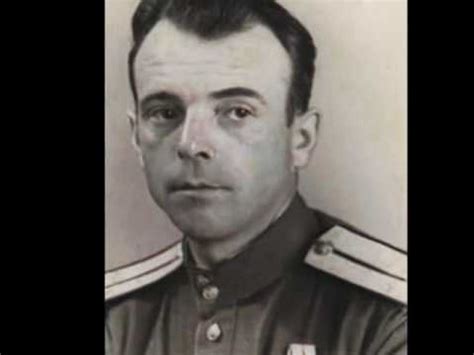
Alexander Kazimirovich Tolush
One of Spassky's earliest trainers (after Vladimir Zak) was Alexander Tolush, an attacking player (and an early proponent of the Poisoned Pawn Variation of the Sicilian Najdorf - see, for example, the fantastic game Korchnoi-Tolush, USSR Championship 1958) - Spassky later changed trainers to Igor Bondarevsky, who was sounder, if less inspired, in his approach. Korchnoi has an interesting view of Tolush and Spassky in his autobiography Chess is My Life (Batsford, 1977). He writes (speaking of the year 1960):
"Spassky began working with Tolush, and within a few years everyone was surprised at how his tactical ability developed. Tolush was a splendid master of attack, and he regenerated his talent and raised it to great heights in Spassky. It is said that when Spassky was playing in a training tournament in 1953, one of his first events under the direction of Tolush, the latter ordered Spassky not to come to see him if he had not sacrificed something in his game the day before. Spassky has rejected this tale as being untrue, but I believe it. Such 'personal violence' was quite in the spirit of Tolush, and had a beneficial influence on the development of Spassky's chess talent."
(Viktor Korchnoi, Chess is My Life, pp.18-19)
Viktor Korchnoi
Korchnoi regretted not accepting an offer to train under Tolush himself. (Tolush had been an officer in a tank division during the Second World War, and had participated in some of the most intense fighting of the war. It seems this was the catalyst for his later alcoholism, but one can only speculate.)
Spassky trained under Tolush for eight years before changing to train with Bondarevsky. Tolush's greatest victory was winning Bucharest in 1953, a strong tournament which was also the young Spassky's first event outside of the Soviet Union.
A galaxy of chess stars
Spassky beat Tolush only once, in the 1958 Soviet Championship in Riga:
Tolush avoided playing the Poisoned Pawn Variation (skipping ahead, we recall that Fischer lost only one game in his favourite Poisoned Pawn - a crushing defeat against Spassky, in game 11 of their 1972 match). Note the two pawn sacrifices: 16.e5, damaging Black's pawn structure and opening new lines, and 22.g5, so that 23.Ne4 is played with tempo; and before that, 15.fxe6 - it's all about creating fresh lines of attack with gain of time. The quiet preparatory moves a3 and Kb1 are also important.
The position at move 15 needs to be transformed into an attack (14...Qb7 is too slow, but Black has missed the opportunity for the "normal" ideal set-up with Ndb7 and Bb7) and Spassky's next few moves create the conditions for the attack itself to crash through - although, of course, it's not the Black King who suffers, but the disorganized pieces on the Q-side. This is the famous "transformation of advantages", although admittedly it's not a very difficult after all the hard work preparing it has been done (exchanging on e6 and then the two pawn sacrifices).
Tolush died in March 1969 - so, sadly, he did not live to see his protege become the World Chess Champion when Spassky defeated Petrosian later that year.
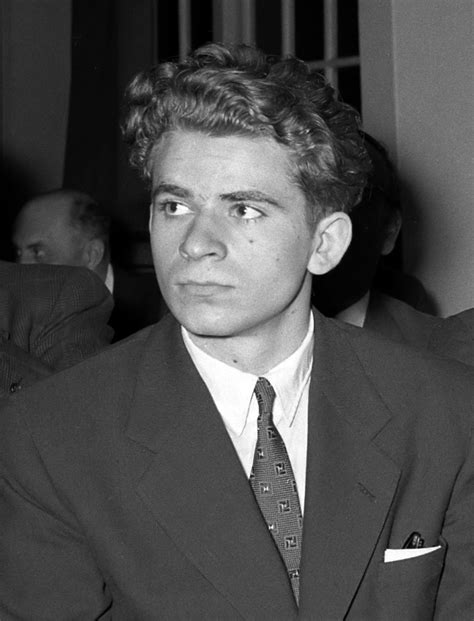
A young Boris Spassky
Finally, here's a game where Spassky's opponent offered some serious resistance. Sometimes an attack goes wrong - after all, we are talking about positions where every move is of premium value. But chess is a practical game, and sometimes an attack doesn't quite work - what does one do then? You must take into account the nature of the position, recognize potential critical moments, and the human element: the character of the players, and how they will handle a stressful battle taking place all over the board - all with the clock ticking away. There were no increments in that distant pre-internet, pre-program era - the time control was forty moves in two and a half hours, when one player would seal a move and the game would be adjourned.
Spassky's ability to recognize these critical moments was acute, and has been recognized by Korchnoi and Kasparov. He could sense these changes and play accordingly - that is quite a skill to possess in chess, and it took him to the very top of the chess world.
Both players found some good moves at the height of the battle: Tringov, later a grandmaster and three-time Champion of Bulgaria, found a lot of the best defensive (and counter-attacking) moves, which Spassky matched until he played 38.f4 - the program likes 38.Rf3, when 38...Rh4 is met by 39.Rh3 Rxh3 40.gxh3 Qc4 41.e6 - this is extremely complicated and difficult to play, especially as both players were likely very short of time.
Georgi Tringov, Bulgarian Champion
Tringov found the best move - 38...Qc4 (the program likes this so much it awards it two exclamation marks), but with the wrong idea - instead of 39...Ng3+, which turns the win into a loss, 39...Rd1 is winning - 40.Rf8+ Rxf8 41.Rxd1 Qb3. Of course, it's easy to point this out with a modern program - we "forget" that the players are human beings.
There is one thing needed for a successful attack, and it's often the same quality that's required for a successful defence: courage. The great masters of attack - Alekhine, Tal, Spassky and Kasparov - had this, but thankfully (at least at the time of writing) it isn't something that can be provided by a computer program.
Happy Birthday, Boris Vasilievich! Да благословит тебя Бог!