
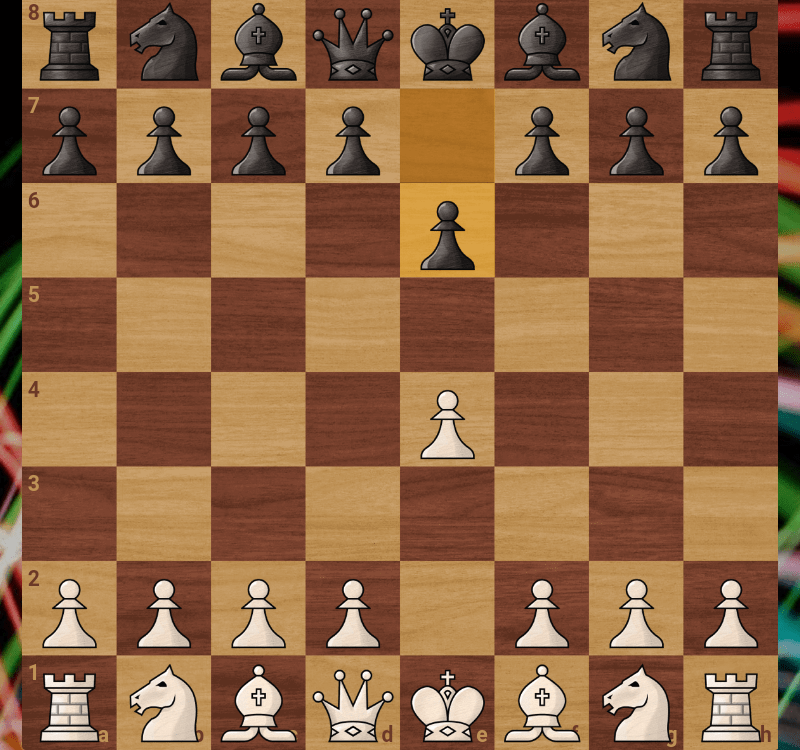
A quick guide to the French defense


The French defense: A defensive opening where black allows white to have a strong structure while black prepares d4.
Main variations:
Advanced
Tarrasch
Winawer
Classical
Exchange
Advanced:
The advanced starts off like this:
The advanced variation is 1. e4 e6, 2. d4, d5, 3. e5
In the advanced variation white tries to make the powerful d4-e5 pawn chain controlling critical squares, while also preventing blacks g8 knight to develop to a strong spot. To break the pawn chain black will usually play 3. c5, and white will almost always play c3 to support the pawn chain, black will usually play Qb6 later to put further pressure on the pawn
This a very common line in the advanced variation
Tarrasch
This is the starting position of the Tarrasch
In the Tarrasch variation, white plays Nd2 to prevent the pin on c3 like in the Winawer variation, black can choose to open up the game (with 3. c5) or close the game (with Nf3).
Closed is slightly more common the open variation, the open variation is slightly similar to the advanced variation.
This is a common continuation of the Tarrasch
Winawer
In the Winawer, black can make doubled pawns on the c file , but if black forces doubled pawns, white can massively protect d4 because later black usually plays c5 so when white recaptures he will still have another reinforcement for d4
This is the starting position of the Winawer
This is the most common continuation of the Winawer
Exchange
In the exchange variation, instead of developing a knight, or pushing the pawn, white recaptures. These often lead to london system like positions, the exchange variation, unlike other French variations, the exchange variation allows peaceful development. The exchange variation often leads to symmetrical positions.
This is the starting position of the exchange variation
This is the most common line in the exchange variation
Classical
This is the starting position of the Classical
In the classical variation, both colors fight for e4, for the 4th move, white either will play e5, or Bg5 pinning the knight, THEN playing e5 to win the knight (unless black plays Be7, or h6. In the future, white may force doubled pawns on the f file.
This is a common continuation of the Classical
Hopefully you enjoyed this blog!!!
