

Do Ratings Matter? Using Elo to Predict Chess World Championships


If Elo is the end all be all, why do I lose to 200s when I don't get any sleep? Whenever I play a much lower-rated opponent, I expect to win. The same can be said of chess players around the world and throughout history: When people face off against weaker players, they anticipate victory.
But at the highest levels of chess, when super grandmasters fight for the title of World Champion, will ratings really tell us who will win? The purpose of this blog is to determine the value of Elo in predicting the outcomes of World Championships. We will review many of the World Championships of the early 21st century in order to reach a conclusion.
This blog will focus on men's chess World Championships because I intend to cover women's World Championships in another blog.
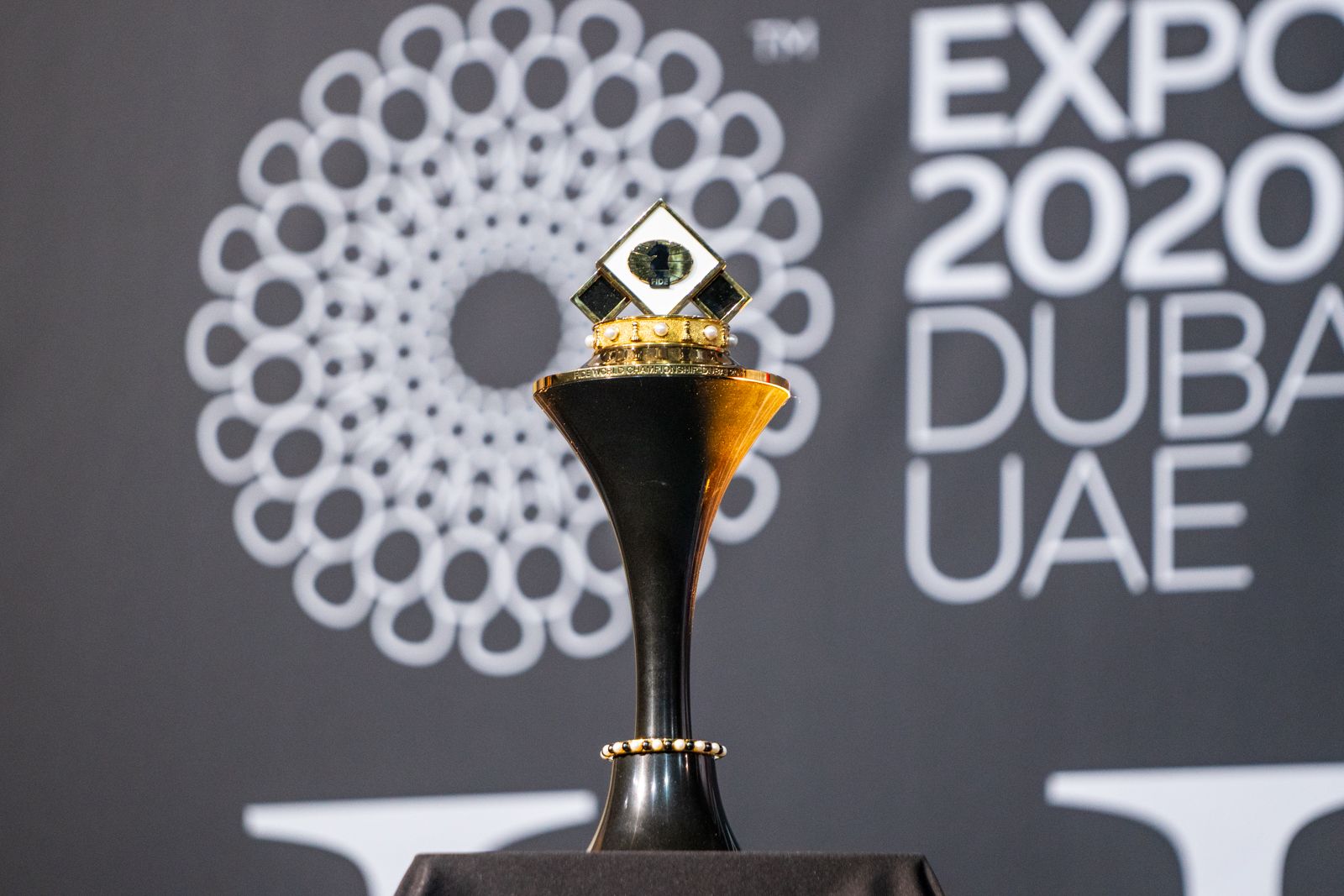
Above - FIDE's trophy for the chess World Champion
How Chess World Championships Work
Every two years, the top chess players around the globe compete in the Candidates Tournament. The winner of the Candidates earns the right to challenge the current chess World Champion. The World Champion and challenger then play a total of 14 classical matches. Whoever wins the majority of the matches becomes the next World Champion.
In the event of a 7-7 tie, competitors enter rapid tiebreaks. If that doesn't produce a clear winner, the chess World Championship is determined by blitz matches -- so maybe speed chess is worthwhile after all!
The highest rated chess player in the world does not automatically become the chess World Champion. In fact, the current World Champion, Gukesh Dommaraju, is "only" the 6th highest rated player in the world! Theoretically, a 300 rated player could become chess World Champion. But they would have to qualify for the Candidates, win the Candidates, and beat the chess World Champion. So that would be an uhhh... Interesting result, as the legendary Vladimir Kramnik would put it.
Anyways, given that rating does not determine the World Champion, it is fascinating to wonder how much of a role it plays in predicting who that champion will be.

Above - Ding Liren and Ian Nepomniachtchi battling it out in tiebreaks of the 2023 World Championship
Two Champions
From 1993 to 2006, there were two different chess organizations that presided over entirely separate World Championships. Due to this, the Professional Chess Association (PCA) and FIDE each had their own World Champions during this period, which meant that there were two current chess World Champions at the same time!
After this period of mayhem and confusion, Vladimir Kramnik (then the PCA World Champion) faced off against Veselin Topalov (then the FIDE World Champion). Vladimir won and became the sole World Champion. Ever since that match, there has only been one chess World Champion.
Kramnik recently baselessly accused countless Grandmasters of cheating and called out numerous "interesting" games and statistics. While Kramnik lost a great deal of respect and credibility for this, his prowess as a chess player and former World Champion is wholly undeniable. Due to this, the first World Championship we will be reviewing is the 2006 match between Kramnik and Topalov.

Above - Vladimir Kramnik, the man who ended 13 years of disputed World Champions
The 2006 World Championship: Kramnik VS. Topalov
The 2006 World Championship took place in late September in Elista, Russia. Veselin Topalov is a Bulgarian super grandmaster whose peak rating of 2826 was the 5th highest Elo of all time. Meanwhile, Kramnik is a dominant Russian super grandmaster who retired in 2019.
In July of 2006, several months before the World Championship was held, Topalov had a classical rating of 2813. On the other hand, Kramnik's classical rating was only 2743, so he was the underdog.
Yet, Kramnik won the first two games of the then 12 game World Championship. After two more draws, Topalov threatened to stop participating in the World Championship. Why? Well, what happened in this World Championship is now known as Toiletgate.
Topalov's Bulgarian team reported that after every single move, Kramnik immediately went to the bathroom. They stated that he visited the bathroom more than 50 times per a game. Finally, the Bulgarian team commented that the restroom was the only area players could visit during games that did not have constant video surveillance. The implication was obvious: The Bulgarians thought Kramnik was cheating.
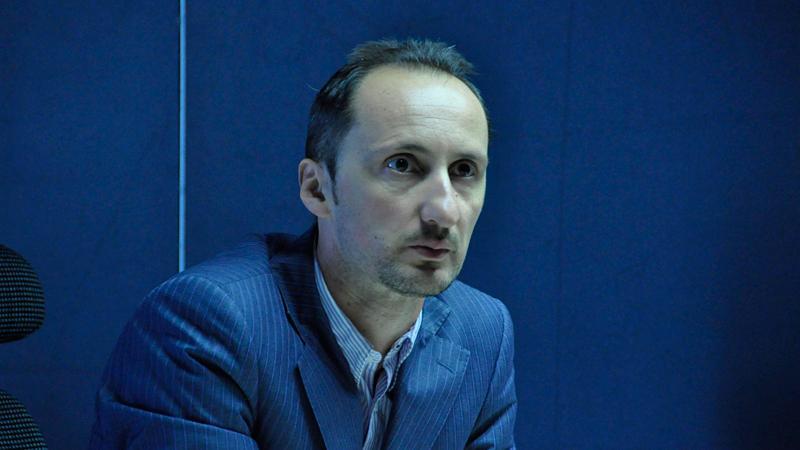
Above - An Image of super GM Veselin Topalov
FIDE investigated these allegations and concluded that the Bulgarian team had exaggerated how often Kramnik used the bathroom. However, they still decided that both players could no longer use private bathrooms and would have to use a common toilet from there on out.
In response, Kramnik refused to play against Topalov and forfeited the 5th game in the match. This caused the match to be put on hold. Eventually, FIDE decided that Kramnik could use his private restroom after all and the World Championship continued.
Topalov won the 8th and 9th games in the match, but Kramnik earned an excellent win in the 10th game. Visible directly beneath this text is that 10th game from this World Championship.
The 11th and 12th games were then drawn. And after a total of 12 matches, the score was 6-6 and the players went to rapid tiebreaks. In the fourth game of tiebreaks, Kramnik won and became world champion. Below is the 16th game of the 2006 World Championship, where Kramnik emerged victorious in tiebreaks.
And at the end of all this chaos, there was one chess World Champion again: Vladimir Kramnik. So, despite being lower rated, Kramnik won the championship.
Viswanathan Anand: 2007 Tournament to 2012 Match
In 2007, instead of a World Championship match, FIDE hosted a round robin tournament and declared that the winner would become the next World Champion. Kramnik agreed to take part in the tournament and agreed that if an opponent won, he would lose his crown.
Kramnik was the highest rated player in the field at the start of the tournament, though Viswanathan (Vishy) Anand was the player with the second highest Elo. In the tournament, Vishy earned a score of 9/14. Kramnik came in second place with a score of 8/14.
With this, Vishy, a super grandmaster from India, became World Champion.
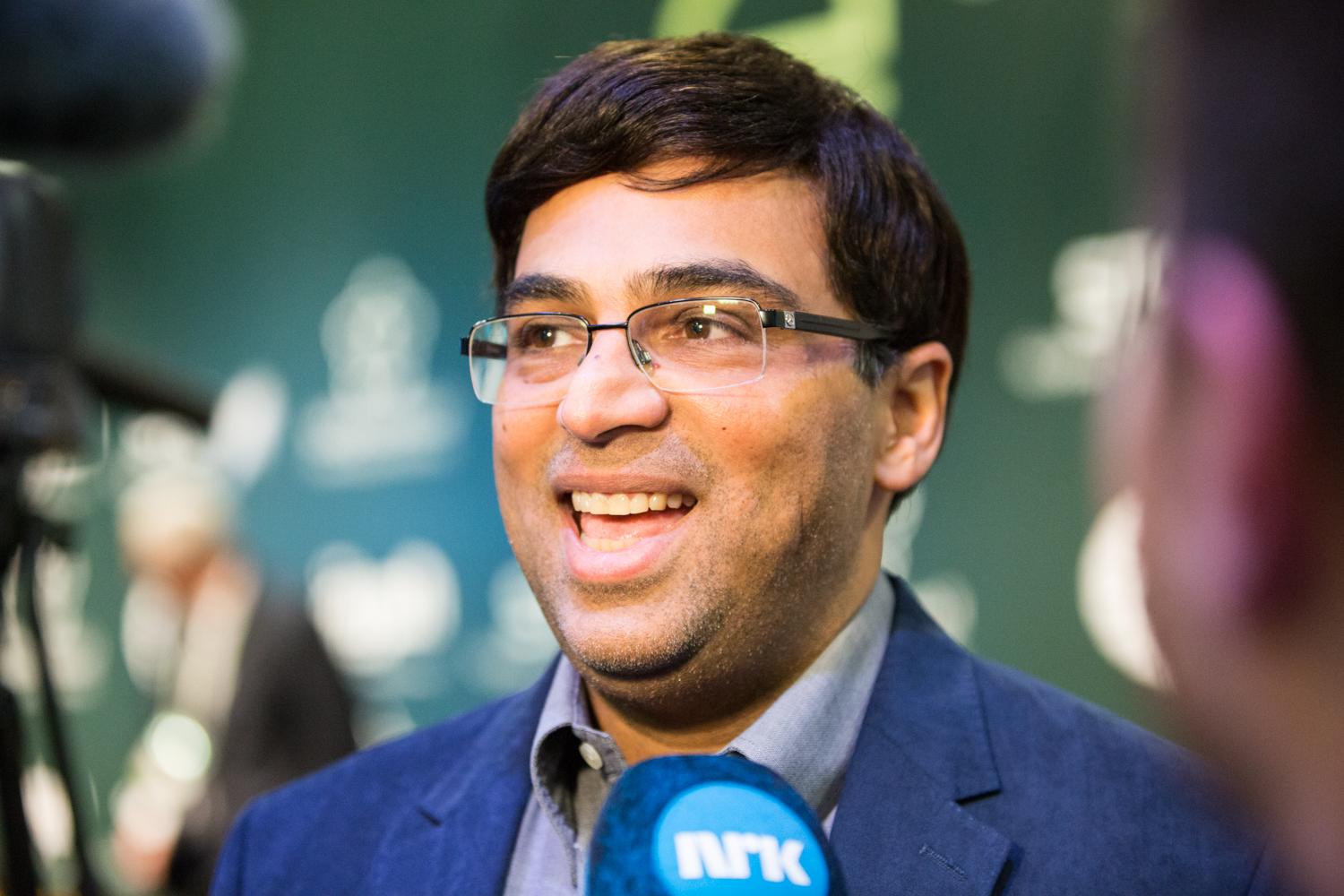
Above- Super GM Vishy Anand
In 2008, Kramnik had a chance to reclaim his title. The format for World Championships had returned to normal and he got to play up to 12 matches against Vishy to determine the World Champion.
Before the match, Vishy had a rating of 2792 while Kramnik's classical Elo was 2769. Unfortunately for Kramnik, he lost in 11 games. Here's one of Vishy's wins that helped him clinch the World Championship:
In 2010, Veselin Topalov fought and won the opportunity to complete what Kramnik had failed to do: dethrone Vishy. The World Championship took place in April in Sofia, Bulgaria, in Topalov's home country.
Before the matches began, Topalov had an Elo of 2805 while Anand had a classical rating of 2787. However, Vishy had Magnus Carlsen, Garry Kasparov, and Vladimir Kramnik help him prepare for this World Championship. So, basically, Topalov was cooked.
Ultimately, Topalov lost in game 12. The match was tied at 5.5 to 5.5 before the final game, but Vishy clinched the victory. Below is the game that won win Vishy the world championship:
In 2012, Vishy Anand faced challenger Boris Gelfand of Israel in Moscow, Russia. At the time, Vishy had a rating of 2791 and Gelfand's Elo was 2727. Vishy had the higher rating and ultimately won, beating Gelfand in tiebreaks.
Magnus Carlsen
Magnus Carlsen is a household name for a reason, and it's not just because certain Youtubers (cough, cough, GOTHAMCHESS) farm him for content. Magnus is commonly considered to be the greatest chess player of all time. He is the highest-rated player today (as of September 1st 2025) and his peak rating was 2882, which is easily the highest peak Elo of all time.

Above - Typical Gothamchess thumbnail
The 2013 World Championship took place in November in Chennai, India. Before the championship, Magnus had a shocking Elo of 2870 while Vishy had a (comparatively) "measly" rating of 2775.
Magnus demolished Vishy, 6.5 to 3.5. Here is Magnus's first win of the match:
If I wrote in depth about all of Magnus's World Championship victories, we would be sitting here for millennia. So, I'll just give a summary. In 2014, Anand won the candidates and earned a rematch against Magnus. However, the much higher rated Magnus once again won.
In 2016, Magnus had an Elo of 2853 and faced Sergey Karjakin in the World Championship. Karjakin's rating was 2772, more than 80 points lower than Magnus's. Karjakin put up a good fight, but Magnus ultimately won in tiebreaks.
Here is one of the matches Magnus won in tiebreaks:

In 2018, Magnus Carlsen won the World Championship AGAIN by beating the American Fabiano Caruana in tiebreaks. Magnus had an Elo of 2835 and Caruana's rating was 2832. The two were evenly matched in classical and drew every game. But in Rapid tiebreaks, Magnus won every match.
In 2021, Magnus, then rated 2855, absolutely walloped Ian Nepomniachtchi. Ian is a Russian super grandmaster and he had a classical rating of 2798 at the time.
Eventually, Magnus grew bored of destroying everyone and abdicated his throne. And with the end of Magnus's storied World Championships, our story nears its conclusion.
Ding and Gukesh
Two World Championships have occurred since 2021 and I would encourage readers to find other places to learn about them. Essentially, the Chinese Super Grandmaster Ding Liren beat Ian Nepomniachtchi and became World Champion. In 2024, Indian teenager (and super grandmaster) Gukesh Dommaraju beat Ding and claimed the throne. In the former World Championship, Ding had a lower rating than Nepomniachtchi but won. And in the most recent World Championship, Gukesh had both the higher rating and the victory.

Above - World champion Gukesh Dommaraju holding a trophy
Conclusion
Now that we've arrived at the end of this long and convoluted blog, I hope you will have learned a great deal about toilets, gates, World Champions, and the dominance of Magnus Carlsen. It would be phenomenal if this blog has taught you more about Toiletgate than about toilets and gates, though being knowledgeable in both areas can be quite helpful.
Ultimately, now that we've explored most of the men's chess World Championships in the 21st century, we must return to our original question: Is rating a reliable predictor of who will win the World Championship?
And the answer is, on the whole, yes. In 2006, 2010, and 2023, the lower-rated player won. But these guys are underdogs and typically lose. In fact, in 2008, 2013, 2014, 2016, 2018, 2021, and 2024, the higher-rated player won. So next time your opponent has a slightly lower Elo than you, be courageous! You are, statistically speaking, more likely to win!
