

From Opera Composer to Chess Master: The Remarkable Life of Philidor


Most chess players know the names of world champions like Capablanca, Fischer, or Carlsen. Yet long before them, in the 18th century, a Frenchman who was better known for his music than his moves quietly reshaped the entire game. His name was François-André Danican Philidor, and he left behind an idea so powerful that it still defines chess nearly three centuries later.
Philidor was not just a strong competitor — he was a revolutionary thinker. At a time when chess was dominated by brilliant sacrifices and tactical fireworks, he insisted that the smallest pieces on the board, the pawns, were the true essence of the game. This vision, which seemed heretical in his era, would transform how players approached chess forever.
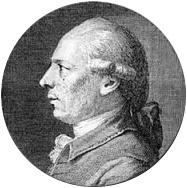
portrait of François-André Philidor
The Five Words That Revolutionized Chess
When pressed to explain his method, Philidor uttered the phrase that shook the chess world:
“Pawns are the soul of chess.”
This wasn’t just clever — it was radical. In the 18th century, pawns were considered expendable. The Romantic style of play glorified sacrifices and brilliant piece attacks. Philidor flipped this worldview: he declared that the weakest pieces were the true foundation of the game. He saw pawns not as expendable foot soldiers, but as structural units whose harmony determined whether an army thrived or collapsed.
From Opera House to Chess Board
The Composer Who Heard Pawns Like Music
Before conquering chess, Philidor was Europe’s most celebrated opera composer. His comic opera Tom Jones ran for over 400 performances, captivating audiences in Paris and London. This musical background shaped his chess genius. Just as he orchestrated harmony between musical notes, he recognized harmony between pawns.
Philidor’s mind was trained to recognize repeating motifs and long-term development in music, and he applied the same vision to the chessboard. He saw pawn chains like musical themes that returned in variation after variation, and he understood that a pawn push in one sector often resonated with another, just as harmony in music depends on multiple voices working together. In both fields, he believed that structure and balance outlasted momentary brilliance.
The Game That Proved Pawns Beat Pieces
How Philidor Crushed Count Brühl (1750)
Philidor’s most famous demonstration came against Count Brühl in 1750. While Brühl launched traditional piece attacks, Philidor quietly built an impregnable pawn wall. His pawns on d4 and e5 anchored his position, and he carefully avoided structural weaknesses such as doubled pawns or isolated pawns.
When Brühl’s attack lost momentum, Philidor’s pawns advanced methodically, squeezing space until the entire position collapsed. This victory was more than a tactical triumph; it was a paradigm shift. It proved that positional play and pawn strategy could defeat even the flashiest of attacks, and it marked the beginning of modern chess understanding.
The First Systematic Chess Book
Analyse du jeu des Échecs (1749)
Before Philidor, chess books (like Greco’s) mainly recorded tactical tricks and flashy miniatures. Philidor’s Analyse du jeu des Échecs was different: it was the first true strategy manual.
In it, Philidor taught that pawn chains were the foundation of the position, that passed pawns could dominate the endgame, that careless pawn moves created weak squares, and that pawn breaks — carefully timed advances — could transform a static position into dynamic play. These ideas were revolutionary because they shifted attention from short-term combinations to long-term planning.
This treatise remains one of the most influential works in chess history. Every modern textbook — from Nimzowitsch’s My System to Silman’s Reassess Your Chess — builds upon the framework that Philidor first articulated.
The Defense That Proves His Point
Why the Philidor Defense Works
1.e4 e5 2.Nf3 d6
At first glance, the Philidor Defense looks passive. White dominates the center, while Black seems cramped. Yet Philidor’s idea was simple: structure over speed. The pawns on e5 and d6 form a rock-solid chain that resists direct attack. Black avoids long-term weaknesses, and while the position may appear modest, it offers lasting stability.
Modern theory may prefer sharper defenses, but the Philidor Defense embodies his philosophy that a sound structure can outweigh temporary disadvantages. To this day, the line is respected as a practical way to reach positions where understanding matters more than memorization.
Philidor in the Endgame: The Famous Rook Study
Philidor explained:
“In the endgame, one advanced pawn can be worth more than a rook.”
Philidor’s endgame analysis remains timeless. His rook + pawn vs rook defensive setup — known as the Philidor Position — is still taught to every serious player. This position demonstrates the principle of keeping the opposing king cut off by the rook, delaying pawn advances until conditions are perfect, and drawing inferior positions with precise timing.
Philidor’s analysis showed that one advanced pawn could outweigh material imbalances if handled correctly. This was not just technique; it was philosophy. The endgame became the ultimate proof that pawns, once considered expendable, were in fact decisive.
From Philidor to Carlsen: Proof Across 300 Years
Philidor’s legacy didn’t stop in the 18th century. The greatest champions in history — Capablanca, Karpov, and Carlsen — all embody his philosophy. Capablanca built his reputation on winning with tiny structural edges, often outplaying opponents without a single tactical flourish. Karpov perfected the art of strangulation, using pawn control to suffocate activity. Carlsen, the modern world champion, consistently converts microscopic structural imbalances into victories.
These champions show that Philidor’s insights are not relics but living truths. Just as he claimed, structural integrity dictates victory — whether in a tavern in 1750 or on a computer-analyzed stage in 2024. Modern openings like the Caro-Kann, French Defense, and Queen’s Gambit Declined all reflect his principle that pawns define the battle.
Conclusion
Philidor began as a musician, but he became the prophet of pawns. In an age when chess was a contest of dazzling sacrifices, he dared to argue that the humblest pieces carried the deepest truth. His words — “Pawns are the soul of chess” — were not just advice for his opponents; they were a manifesto that reshaped the game.
Nearly three centuries later, that vision still holds. Every time a world champion squeezes a win from a tiny structural edge, every time a beginner learns the importance of pawn chains and weak squares, Philidor’s influence is present. He transformed chess from a stage for fireworks into a science of foundations. And so, when we sit at the board today, pushing pawns into motion, we are continuing the quiet revolution of the man who heard harmony in their advance and revealed the soul of chess to the world.
