

About Online Chess Cheating

Cheating in chess happens when someone decides that they do not want to play using their own brain, and they turn to using help from a friend or a chess engine to find better moves. This is obviously unfair to the other player, and ruins the experience of the game. It's a selfish and thoughtless thing to do. Fortunately, our research shows that fewer than 0.2% of players cheat in online chess, so it is much less common than some people think.
While cheating (aka "Fair Play" on Chess.com) does include numerous forms of abuse, including sandbagging and multi-accounting, this article deals primarily with the most common form of cheating: using a chess engine for assistance.
Chess.com closes more than 800 accounts every day for cheating. And while that may seem like a lot, more than 70,000 new players join Chess.com each day. Still, people are understandably concerned about cheating (though cheating paranoia can be just as much of a problem!).
As a company, Chess.com is continuously investing in new technology and processes to combat cheating. It also helps when the community is informed about cheating, and to that end, this article addresses many of your most common cheating-related questions. For more information regarding fair play, see our support article.
- Closures
- Titled Closures
- Automated Closures
- Fair-Play Team
- Who Cheats?
- Reporting Cheaters
- Accuracy
- Methods
- Confidentiality
- Bans
- Say-So
- False Positives
- How Can You Help?
Chess.com has closed over 550,000 accounts.
In Chess.com's history (calculated October 5, 2020) we have closed more than half a million accounts for cheating! Our projections predict we will reach 600,000 accounts closed before the end of 2022 and one million accounts by early 2024.
Currently, we are averaging over 800 closures per day for engine-use alone and an additional 120 closures per day for sandbagging, rating manipulation, and other types of fair play violations.

As you can see, Chess.com takes cheating very seriously, and while these numbers seem to be high, there are more than 20 million people playing chess on Chess.com each month, so the actual percentage is fairly low.
Of those closed, more than 500 were titled players.
While titled players would seem to have no need to cheat, there is much evidence that some do!
Of the cheaters we have detected to date, 51 (10.2%) are grandmasters. 98 (19.6%) are international masters, and 160 (31.9%) are FIDE masters. More than 90% of these players are male.

We have written confessions from many of the players we've closed, including from some inside the top 100 in the world.
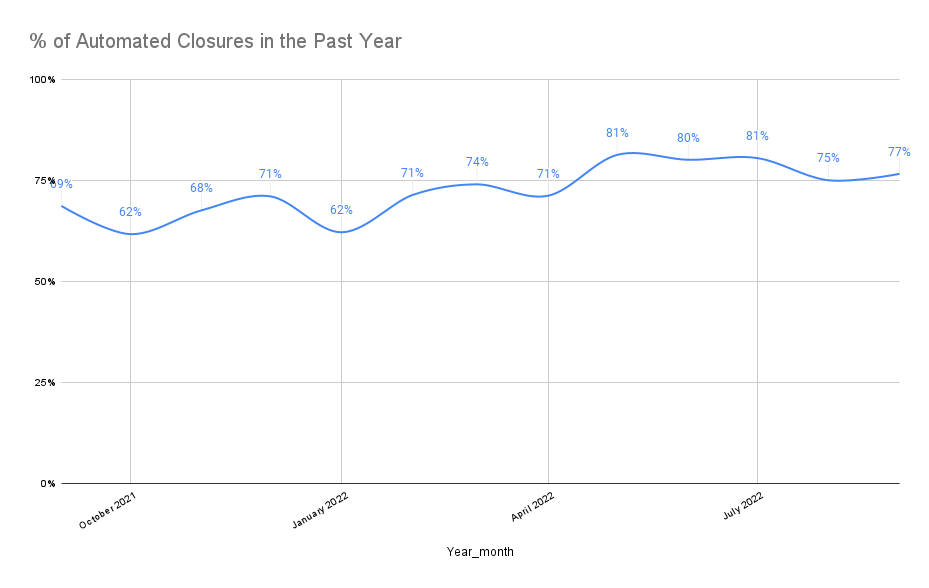
Most closures are now automated.
In order to meet the needs of our community, we've ensured that the majority of closures (77% last month) are done without the need for a human to review the case. Human review takes time, which is worse for our members because it will take longer for blatant cheaters to be closed.
We have created a system that detects suspicious cases based on a number of factors and closes them by interpreting what our systems are saying. We can't go into much more detail than that because unfortunately, the cheaters are reading this too!
Automated closures have ramped up over the past couple of years in response to the surge of new players on the site and now comprise roughly 75% of the total closures in a month.
We have also set up automated sandbagging detection, which first warns and then closes the member for detected violations. It closes on average 120 accounts per day and warns 250.
Chess.com employs 20 fair-play team members.
Chess.com is dedicated to preserving the integrity of the game. To that end, we invest hundreds of thousands of dollars in combating cheating each year.
This number includes six full-time analysts, four researchers, three grandmasters, and three developers dedicated to improving and maintaining our systems. Many other staff members also contribute to protecting the game, including those on the events and support teams.
You likely know (or are...) a chess player who has cheated.
Many chess players think that cheaters aren't representative of the chess community. The unfortunate truth is that, as community members ourselves, we can say that several of our clubmates and chess friends have been closed for cheating. Chess.com staff personally know and like many Chess.com members that we have closed for cheating. If you are well-connected in your local or regional community, statistically, you probably also know someone who has been closed for cheating, whether the case was public or private.
Anyone can report cheaters; all reports are acted on.
Every member on Chess.com can report a member for cheating. Each report guarantees that the reported member's most recent games will be reviewed (which may result in an automated closure in clear cases) and (if the case is complex) a fair-play team member.
If you have additional information about a suspected cheater (such as a suspicion that the member only cheated in a specific event), please include that information. It can improve our ability to build a clear case.
We often receive complaints regarding members that are deemed to be clearly cheating and have not been closed. For many reasons (including youth), Chess.com may elect to close member accounts privately.
CAPS is not cheat detection.
Chess.com regularly receives complaints about members who have an excellent accuracy score in a game. We are thrilled to see our members using game reports, but the accuracy scores that are provided are not a part of our cheat detection, and they shouldn't be considered immediately damning evidence of cheating. Even beginning players can achieve very high accuracy scores if their opponent errs early, and they capitalize on the clear mistakes.
We will grant you that if a beginner has a 99% accuracy against a grandmaster, we will be very suspicious... However, in general, accuracy is NOT evidence.
