Discover the deeper meaning behind this quote, and understand your 'Hero's Journey' in the chess world.
Introduction
'When the student is ready, the teacher will appear.'We've all heard this quote before, but have you ever wondered about it...

Héctor Laiz Ibáñez and Raúl Sánchez García are currently conducting a qualitative study on cheating in online chess, whose preliminary findings they describe in a two-part blog entry. This blog post is the...
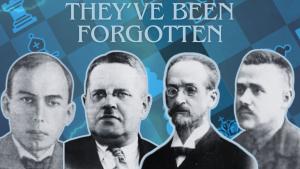
Chess composers have played an important role in the history of chess, similar to the role that Bach and Beethoven played in the development of classical music. Chess composition is an undeniable art form, but the significance of these people is o...

Dear Chess Lovers, I'm back with more Chess songs, but I need your help...
Im searching for 4 Chess.com users who won a contest we made back in 2020, so they can see their checkmates and tactics featured in my art music video, The contest price ...

There's a good website for bughouse puzzles. All of these puzzles include both of the boards. Some of the puzzles are local puzzles--mating on your board. Some involve sacrificing for a piece for your partner. Others involve asking your partn...

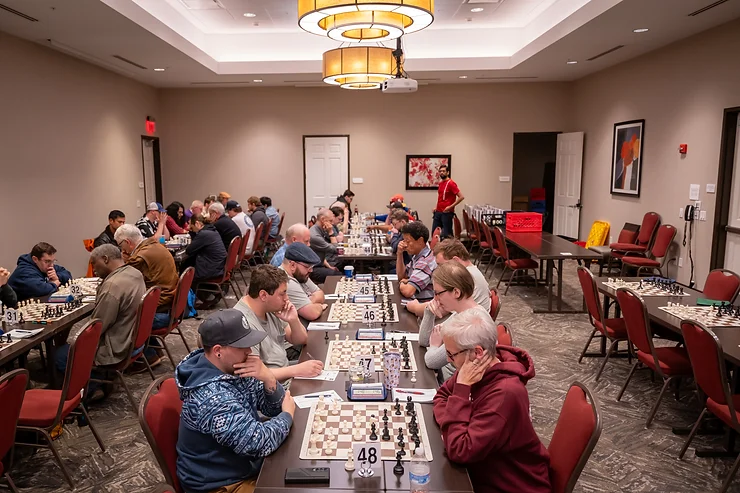
One of the Charlotte Chess Center's signature events, the ALTO tournament, took place at the Southpark Hilton Garden Inn from April 19-21, 2024. ALTO stands for At Least Twenty-One, so only players 21 years of age or older were eligible to play...
There’s a big part about Chessable courses that we sometimes forget – they’re living things. Mistakes are fixed, theory gets updated, and authors react to the latest student questions.
So in our new series, Going Above and Beyo...
“That’s a brilliant technique! You should write an article on this, Avo.”,- James Altucher, author of the bestseller “Skip the Line,” where he teaches different nice techniques for max speeding learning.
And h...
Hello, chess friends!At 12-1pm Sydney time on Thursday, 9th May (that's Wednesday night for those for you in the US), I will be covering the most requested topic of 'How To Develop An Effective Middlegame Plan', exclusively in my free Facebook gro...
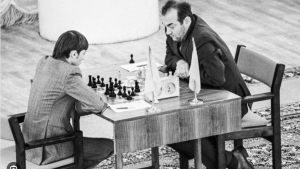
In 1974 Karpov faced Korchnoi in the Candidates' Final, to decide who would play Bobby Fischer for the World Championship in 1975.
Recently, in the comments section of one of my recent blog posts,
https://www.chess.com/blog/kamalakanta/vidit-p...
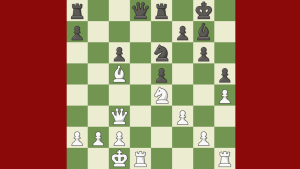
#italian #friedliver #twoknights #fritz
If you follow my blog and channel, you’ll know that I like tactical, attacking chess in the romantic style. If you’re new to my blog, hello! 👋 Please consider subscribing to my YouTube...
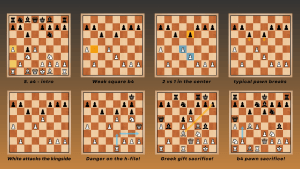
This is one of the rare videos dealing with the main line (Dutch variation) of the Slav Defense. The goal was to present and explain the most logical possibility White has in the line, using a move-by-move method, while also analyzing pawn structu...
Raúl Sánchez García and Héctor Laiz Ibáñez are currently conducting a qualitative study on cheating in online chess, whose preliminary findings they describe in a two-part blog entry. This blog post is the...
Dear Friends, I am starting a new weekly podcast with the twitch streamer Elaynah called The Chess Lounge. The Chess Lounge is your place to kick back, relax and explore the game of chess from all angles. We bringing you weekly episodes with ...
#french #steiner
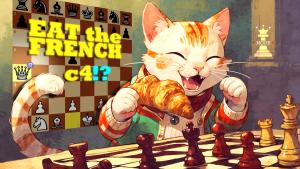
Do you like playing against the French Defense? I certainly don’t! As a (1. e4) player, the French Defence (1… e6) is my Achilles’ heel. When I look at my stats, I lose against the French Defense arou...
Afternoon everyone. Back with part three. A lot less text this time, but my usual bagful of games and pictures. Same rules as the last two - drop in and out when you have 10 minutes.
So last time I mentioned Theo Tylor and Rupert Cross. You can ...
Do you want to learn the correct lessons from each chess game you play?If so, you've come to the right place!One of the main reasons that a chess player fails to improve is that they repeat the same mistakes in their chess games. Analyzing ou...
#ruylopez #beginners #quickwins
chess noob Quick Wins! is a series of short videos, to demonstrate very quick wins! As a beginner, you become aware of the Scholar's Mate and the Fool's Mate, but neither of these show up in real ga...
A few weeks ago, I saw the total solar eclipse over North America. It was an incredible, surreal experience. Yet what made it even more memorable was coincidentally, the night before the eclipse, I found something equally rare and hard to belie...
Welcome back to the ‘Who is?’ series, where we interview chess streamers about their chess journey, how they got into streaming, and anything and everything they’re willing to share about their life off-stream and off-board!Today...
O.K. so I am back with part two - a mass of stuff here, so same rules as last time!! Dip in and out when you have time and I hope you enjoy what is here. I have decided to make it three parts, so more next time, with a lot of games. Mainly text th...
Last weekend a Bristol Centenary & WECU Championship chess tournament was played in Bristol, UK.
In the open section of this tournament 63 players competed for the West of England Chess Champion title.
Besides the participation of two inte...
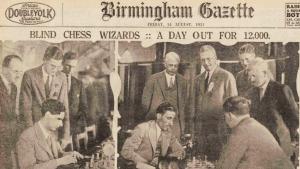
From a sporting perspective, these were the storylines in chess in the mid-1920s: 1.the invincibility of Capablanca, the question of whether anybody would ever come close to him; 2.the surprising resurgence of Lasker, winning a pair of internation...
A big part of the ‘mental game’ is learning how to manage our emotions, so that we control our actions rather than being a ‘slave’ to our emotions.
The influence of our emotions is well summarised by the ‘Law ...
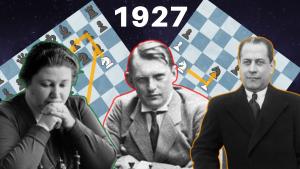
In the year 1927, two of the greatest chess players of all time faced off in an epic battle. The reigning champion, Jose Raul Capablanca, was up against the determined challenger, Alexander Alekhine, who was vying for the coveted title of World Ch...