Target Skill Range: Intermediate (Rated 1400-1799)
Acquire the knowledge you need to approach the opening with confidence and achieve success!
Tasks:
Extend your base knowledge of "tournament openings."
Aim for consistency.
Learn the con...
As you know, there are all kinds of chess games. When you sit down to play, you don’t know what kind of game it will be. It could be a long endgame where one side is slightly better. It could be a fast defeat for a player who is too optimistic. It...

The 1969 U.S. Championship was also a zonal qualifier, with the top three finishers advancing to the Interzonal. Fischer however, did not play, because of disagreements about the tournament's format and prize fund. Benko, one of the three qualifie...

Openings like the Réti and Reversed King's Indian became popular in the 1920s when the hyper-modern players like Réti, Nimzowitch, Breyer, and Grünfeld came into the limelight. They introduced a revelation: central control need ...

Dear GM Prasad and GM Panchanathan :
I am grateful to see the revival of this weekly column after IM Silman. Thank you! Hope you can answer a few of my questions below:
a) I understand that in order to become better one has to accept losing many...

This is a quick guide to a video series. This series shows a few different ideas that white can use to play against the Petroff, including the under-investigated Cochrane Gambit. Clearly it would not be a bad idea for a black player of the Petroff...
We continue our exploration of classical chess games with the next immortal gem. It is a truly unique situation when a chess player became famous because of just one ultra short game he played (just 7 moves). Moreover, as far as I know, it is the...
Here is a game that shows the dangers of ignoring the threats against your castled king. After some inaccurate opening moves by Smirin, instead of exchanging off pieces, as Sutovsky is preparing an attack, he plays to solve his problems by force. ...
Endgames are not only about technique, maneuvering and strategy. Tactics play as big of a role in endgames as they do in the other stages of the game. In order to develop an acute dynamic sense in the endgames you have to train in solving endgame-...
How can I get better at chess? What's the best way to organize my limited study time? What's the right training plan for my level?
Does that sound like you? Well, not anymore!
Study guides tell you everything you need to know about how t...
Need a little help navigating the thousands of videos on Chess.com? Use this guide to find all the videos you need on topics such as:
Starting Out
The Opening
Tactics
Strategy
Master G...
This is guide to a video series. Intermediate Checkmates is for Beginner and Intermediate players to improve their vocabulary of checkmating positions. Recognizing a few patterns in various altered situations is absolutely required for being able ...
As you might know, I have decided to change the topic of my column from the psychology of chess to “Attack and Defense”. On Chess.com we have (or had) columns about endgames, openings, and strategy. I decided to cover the interplay of attack and d...
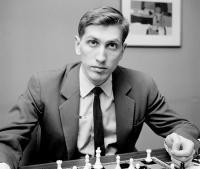
In January 1963, Bobby again won the U.S Championship, with 8 of 11. In this championship, he lost a game to Edmar Mednis, his first ever loss in U.S. championship history. He started with only 2 points from 4 games, but winning the game in the f...
The 61st Women’s Russian Championship took place in Moscow from August 18 to 29. This prestigious tournament didn’t get an adequate coverage in the chess media due to language barriers (most of the materials were available only in Russian), and th...
Hello, I have a question:
I have always been taught that when both kings are castled on opposite sides, you should go for an attack on the opposite wing. Recently, however, I played a game in which, after I castled king side and my opponent quee...
One concept that new players sometimes find difficult to grasp is weak squares. “I understand how a piece can be weak, but a weak square? What does that mean?”
A square is weak when it is controlled by your opponent and you have little or no c...
Last week we started our little journey into chess history. We want to look at the most important classical games. The ones that moved chess theory and broadened the general understanding of the game. In my opinion no chess player can call h...
Any serious chess player after finishing a tournament analyzes his games. (Yes, I am saying: no matter how good you are, if you don't analyze your games, you are not serious!) Through game analysis you can come to important conclusions regarding w...
One of the events of the Botvinnik Memorial held recently is a senior tournament. There were ten players in a round robin. Viktor Korchnoi came in clear first with 5 wins and 4 draws. The particpants are listed with their ratings, scores, and birt...
Another of the “balancing acts” that chess players make is between the poles of consistency and flexibility. We all know that human chess players need a plan in order to play a decent game. We cannot calculate every single move the way...
[part 2]
In 1958, Fischer became the youngest grandmaster in history, at 15 years and 6 months. This record held until 1991 when it was broken by Judith Polgar. In 1959, in the Candidates Tournament Bled / Zagreb / Belgrade, he finished fifth to...
Here and there we can hear about people either wanting to earn a chess title, or wondering how and what for they are earned. Instead of offering a link to a formal encyclopedic page about this matter, I would rather share with you some insights ba...
Dear GM Panchanathan,
I have psychology problems in the game of chess. My rating usually goes up and down from 1900 to 2050. One of my weaknesses is that I cannot control external feelings (i.e. fear, stress, overconfidence) when playing chess. ...